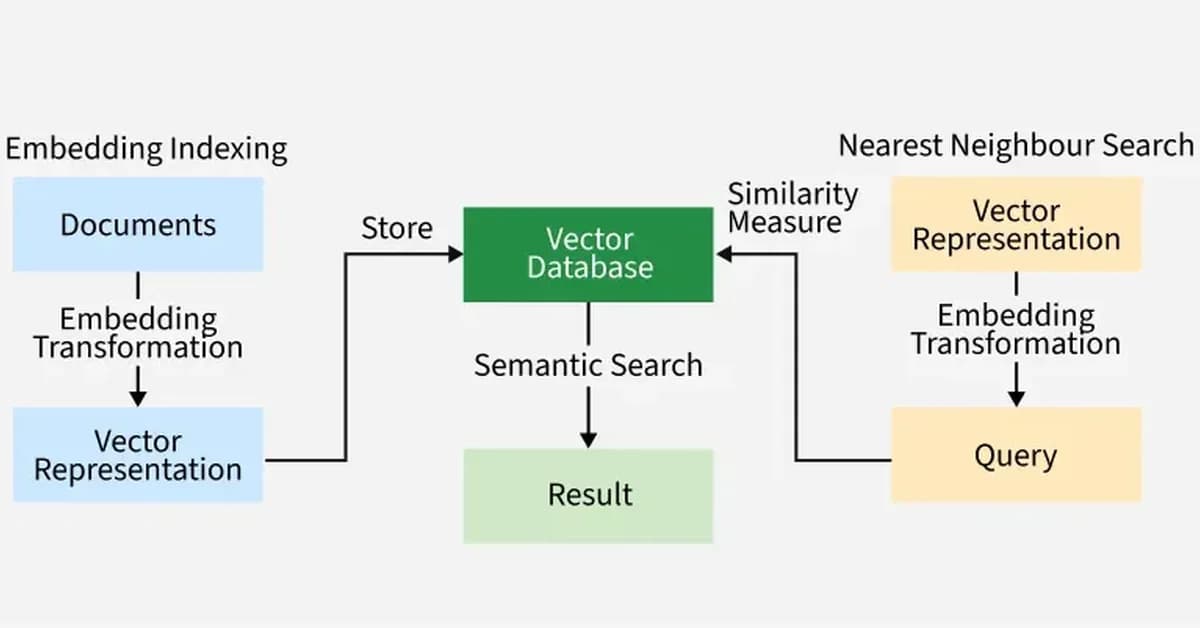
The provided code snippets and explanations illustrate how to use NeuroLink's embedding functionalities for building a semantic search engine and integrating it with Retrieval-Augmented Generation (RAG) pipelines. Below is an overview of the key components and steps involved:
Embedding Documents
-
Embedding Individual Texts:
- Use
embed(text: string): Promise<number[]>to generate embeddings for individual pieces of text.
- Use
-
Batch Embedding:
- Use
embedMany(texts: string[]): Promise<number[][]>to efficiently embed multiple texts at once.
- Use
Building a Semantic Search Engine
-
Indexing Documents:
- Convert documents into chunks (if necessary).
- Generate embeddings for each chunk.
- Store the embeddings along with their metadata in an index using
vectorStore.upsert(indexName: string, documentNodes: DocumentNode[]).
-
Querying the Index:
- For a given query, generate its embedding using
embed(query: string). - Use this embedding to find similar documents by querying the vector store with
vectorStore.query(indexName: string, queryVector: number[], topK: number).
- For a given query, generate its embedding using
Integration with RAG Pipelines
Read the full article at DEV Community
Want to create content about this topic? Use Nemati AI tools to generate articles, social posts, and more.
2
Tags
Contents

Ali NematiWritten by Ali
![[AINews] The Unreasonable Effectiveness of Closing the Loop](/_next/image?url=https%3A%2F%2Fmedia.nemati.ai%2Fmedia%2Fblog%2Fimages%2Farticles%2F600e22851bc7453b.webp&w=3840&q=75)