Summary: Sessions vs JWT in Express
In this article, we explore the differences between session-based authentication and JSON Web Token (JWT) authentication in an Express.js application. Here's a concise summary of key points:
Key Concepts:
- Cookies: Used to transport data like session IDs or tokens.
- HttpOnly: Prevents JavaScript access, enhancing security.
- Secure: Ensures cookies are sent over HTTPS only.
- SameSite: Reduces the risk of Cross-Site Request Forgery (CSRF).
Sessions:
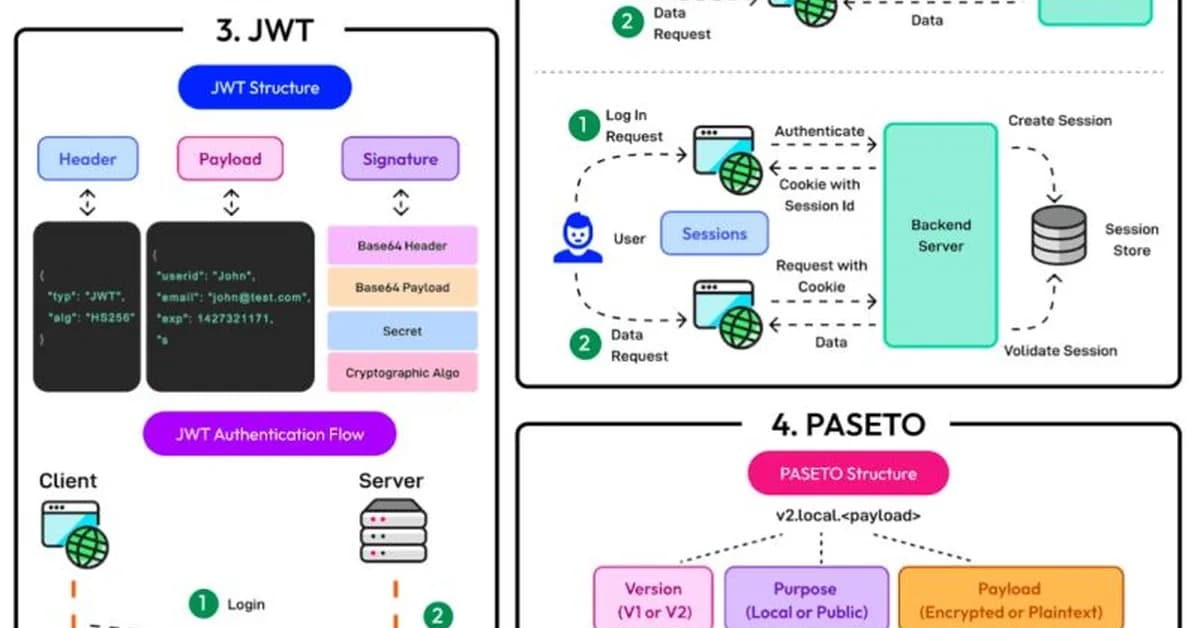
- Stateful: Server stores user session data.
- Storage:
- Session ID stored in a cookie.
- Session data stored server-side (memory, database).
- Scalability: Requires shared session store across instances (e.g., Redis).
- Logout: Easy to invalidate sessions on the server.
- Security Risks: Session hijacking and CSRF attacks.
JWT:
- Stateless: Server doesn't store user data; trusts token after verification.
- Storage:
- Token stored client-side: browser storage (localStorage, sessionStorage) or HttpOnly cookie.
- Scalability: Easy to scale horizontally without server
Read the full article at DEV Community
Want to create content about this topic? Use Nemati AI tools to generate articles, social posts, and more.
169
Contents

Ali NematiWritten by Ali