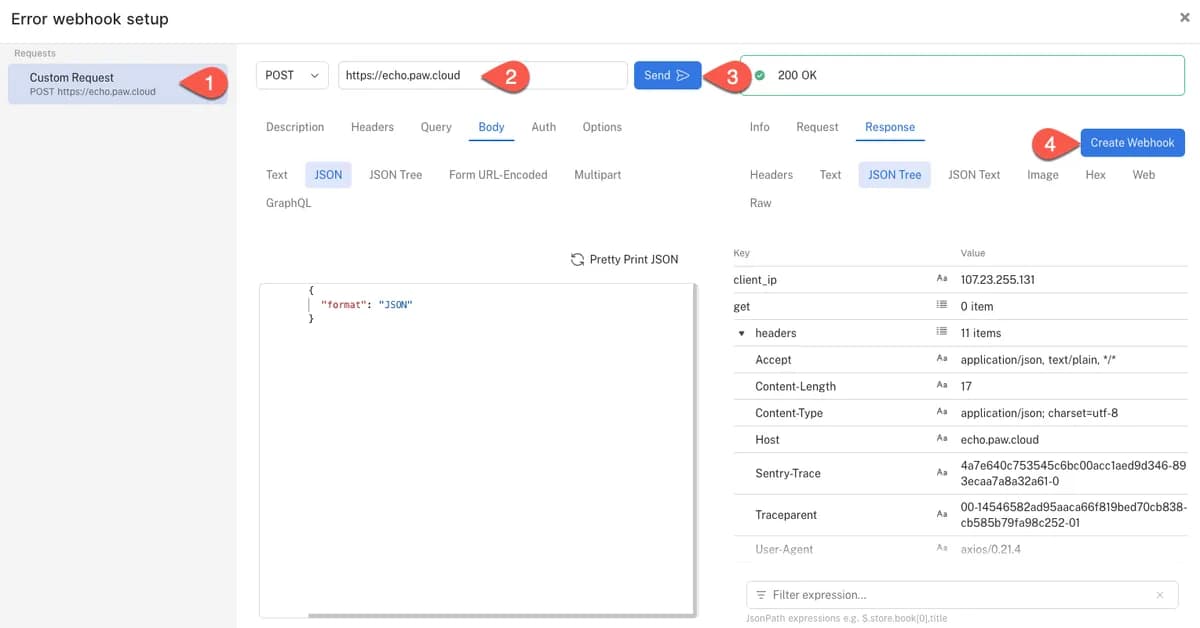
The provided Python code snippet outlines a Flask application that serves as an endpoint for DetectZeStack webhooks. The application verifies the webhook's signature, queries the change feed to gather context about changes in technology stacks of monitored domains, and then posts formatted messages to Slack.
Below is a detailed explanation and completion of this example:
1. Import Necessary Libraries
python1import hmac 2import hashlib 3import requests 4from flask import Flask, request, jsonify
hmacandhashlib: Used for verifying the webhook signature.requests: For making HTTP requests to DetectZeStack API and Slack Webhook.Flask,request,jsonify: Core components of a Flask application.
2. Initialize Flask App
python1app = Flask(__name__)
3. Define Secret Key for Webhook Verification
python1WEBHOOK_SECRET = 'your_webhook_secret' 2SLACK_WEBHOOK_URL = 'https://slack.com/api/chat.postMessage' 3SLACK_CHANNEL_ID = '#tech-stack-changes' # Replace with your Slack channel ID
WEBHOOK_SECRET: The secret key used to sign webhook payloads by DetectZeStack.
Read the full article at DEV Community
Want to create content about this topic? Use Nemati AI tools to generate articles, social posts, and more.
2
Tags
Contents

Ali NematiWritten by Ali
![[AINews] The Unreasonable Effectiveness of Closing the Loop](/_next/image?url=https%3A%2F%2Fmedia.nemati.ai%2Fmedia%2Fblog%2Fimages%2Farticles%2F600e22851bc7453b.webp&w=3840&q=75)