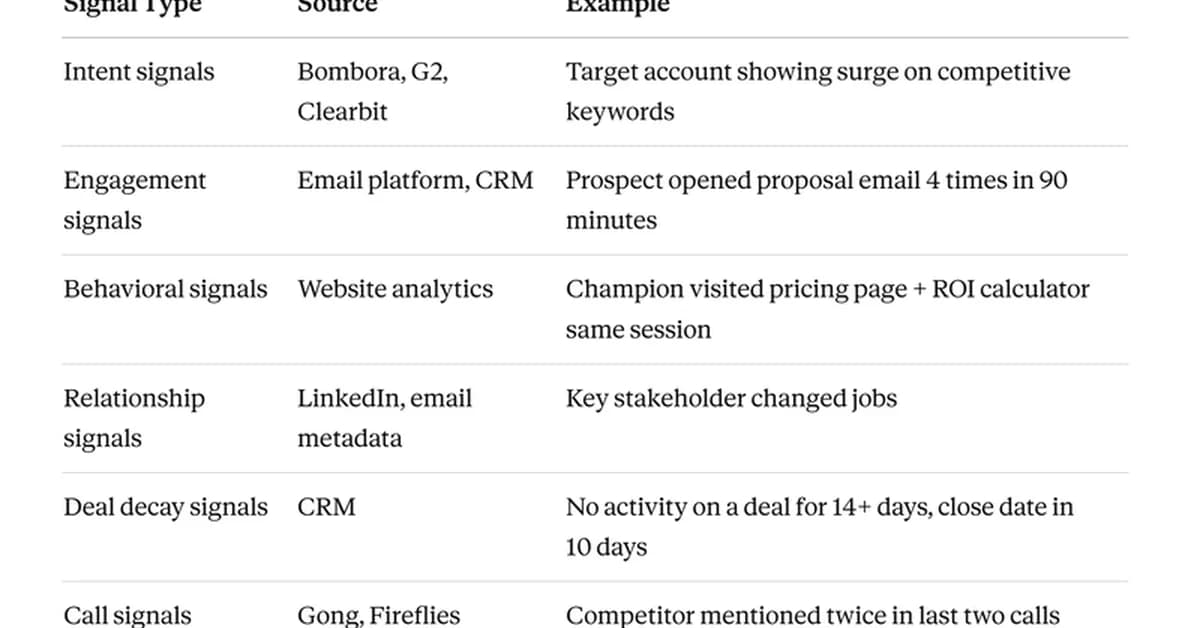
The architecture and approach described in your blog post for AI-driven revenue execution focus on reducing latency between detecting a signal (e.g., customer interaction or deal event) and executing an action that can positively impact the sales process. This is particularly important because timely intervention can significantly influence deal outcomes, especially when dealing with high-priority signals.
Here are some key takeaways from your architecture:
-
Normalization at the Boundary:
- Ensuring all incoming data (signals) are normalized before processing helps maintain consistency and reduces complexity in downstream systems.
- This step is crucial for handling diverse data sources (e.g., CRM, marketing automation tools, customer interactions) uniformly.
-
Enrichment Before Decision-Making:
- Enriching signals with contextual information such as deal stage, account history, and open tasks before passing them to the decision engine ensures that decisions are based on comprehensive insights.
- This approach prevents the LLM from having to infer context, which can be time-consuming and less accurate.
-
Rules Engine First, LLM Second:
- A rules-based system handles straightforward cases quickly and predictably.
- Complex or ambiguous signals are then passed to an LLM for reasoning, ensuring that
Read the full article at DEV Community
Want to create content about this topic? Use Nemati AI tools to generate articles, social posts, and more.
Views153

Ali NematiBlogUI.author_articles