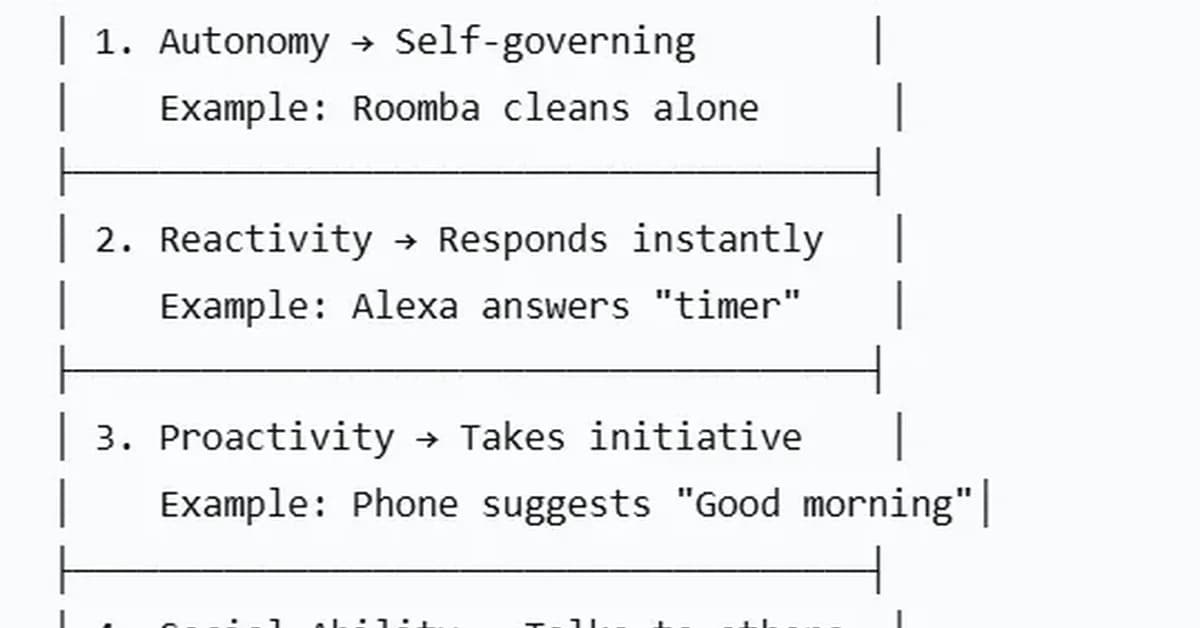
Agent-Based Intelligent Systems enable software to think, work, and collaborate like living organisms, creating an intelligent, automated, and adaptive world. These systems are already prevalent in technologies such as Roomba vacuums, Google Maps, and self-driving cars.
In multi-agent systems (MAS), multiple agents interact to solve complex problems, either cooperatively or competitively. For example, in a smart city traffic system, different agents manage traffic lights, emergency vehicles, and monitoring tasks. Communication protocols like FIPA-ACL allow these agents to exchange information effectively.
Looking ahead, the next five years will see personal AI agents managing daily life, smart cities with coordinated systems for various services, healthcare swarms detecting diseases early, and autonomous companies run entirely by agent negotiations and transactions. By 2033, a global agent internet could connect agents across different systems worldwide, while human-agent teams work together as equals in fields like space exploration.
These advancements highlight the growing importance of Agent-Based Intelligent Systems in shaping future technological landscapes.
Read the full article at DEV Community
Want to create content about this topic? Use Nemati AI tools to generate articles, social posts, and more.