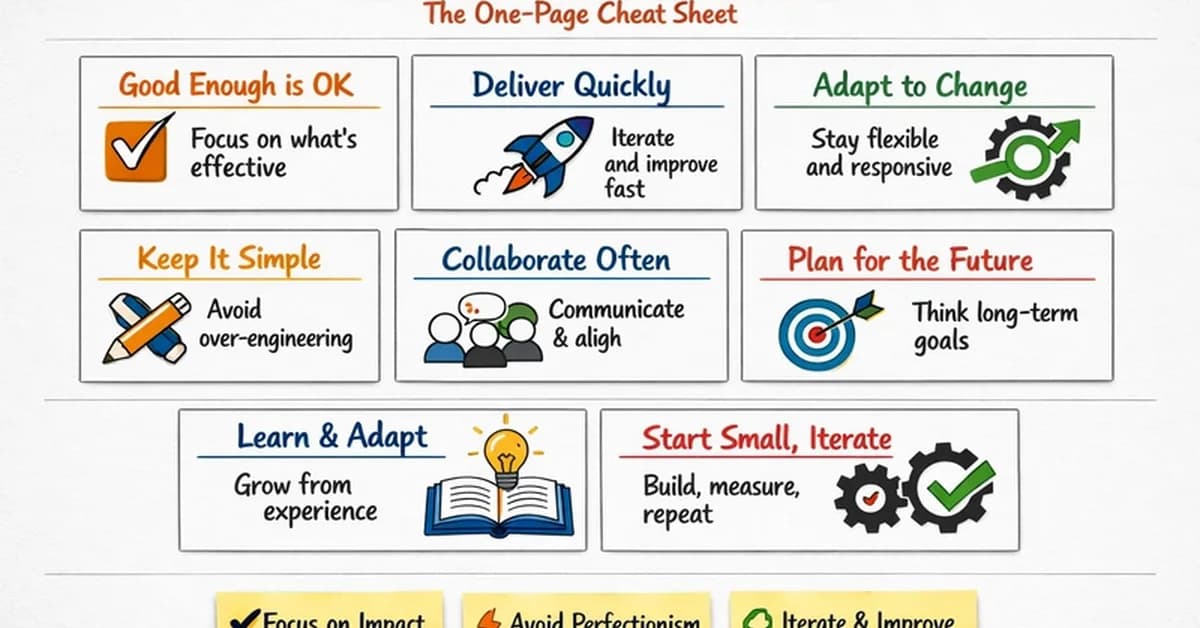
This article provides an in-depth exploration of software architecture and its inherent paradoxes, emphasizing pragmatism over perfectionism. Here are some key takeaways:
-
Paradox of Perfection: The idea that striving for perfect architecture often leads to paralysis and missed opportunities.
-
Pragmatic Architecture:
- Focus on solving current business problems.
- Ensure the system can evolve without major rewrites.
- Maintain simplicity and clarity in design.
- Document assumptions and trade-offs transparently.
-
Avoiding Architectural Dogma:
- Question whether microservices, Kubernetes, NoSQL databases, event sourcing, serverless architectures, cloud-native tooling, or service meshes are always necessary.
- Measure the actual benefits against potential costs.
-
Good Enough Principle:
- Define "good enough" as meeting current needs with a clear path to evolve and being understandable by the team.
- Use criteria like solving business problems, reversibility of changes, and team confidence in operating the system to decide when an architecture is ready for implementation.
-
Practical Takeaways:
- For developers: Focus on simplicity over complexity, refactor incrementally, document assumptions, and agree on
Read the full article at DEV Community
Want to create content about this topic? Use Nemati AI tools to generate articles, social posts, and more.
2

Ali NematiWritten by Ali
![[AINews] The Unreasonable Effectiveness of Closing the Loop](/_next/image?url=https%3A%2F%2Fmedia.nemati.ai%2Fmedia%2Fblog%2Fimages%2Farticles%2F600e22851bc7453b.webp&w=3840&q=75)