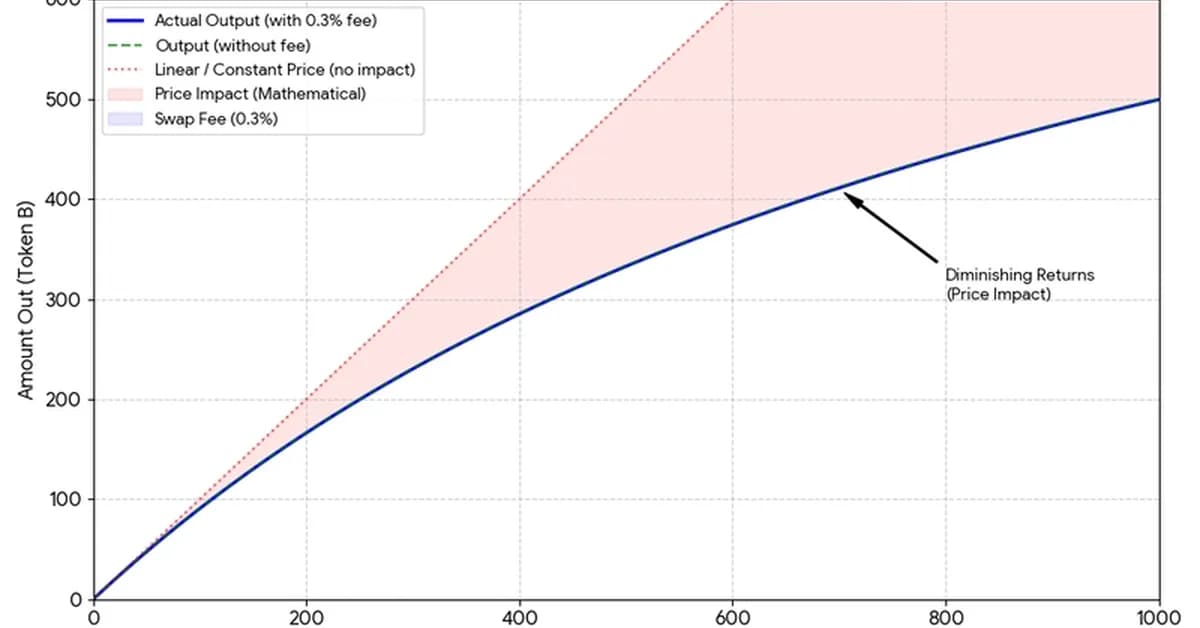
The design of Uniswap V2's swap() function within a pair contract indeed seems counterintuitive at first glance due to its "optimistic transfer" approach. However, this mechanism is carefully crafted to ensure security and efficiency. Let's break down how it works:
Key Points
-
Atomicity: The entire sequence of actions in the
swap()function happens within a single transaction. This means that once the tokens are transferred out, the invariant check (which ensures the pool remains balanced) is performed immediately afterward. -
Invariant Check: The core of the security mechanism lies in the constant product invariant (
k = x * y). After transferring tokens toto, the pair contract checks whether the new state of the reserves still satisfies this invariant. If it does, the swap is valid; otherwise, the transaction reverts. -
Lock Modifier: To prevent reentrancy attacks, Uniswap V2 uses a
lockmodifier on theswap()function. This ensures that once the function starts executing, no other call can interfere with its execution until it completes or fails.
Detailed Workflow
- Transfer Tokens:
- The pair contract transfers tokens to the specified recipient (`
Read the full article at DEV Community
Want to create content about this topic? Use Nemati AI tools to generate articles, social posts, and more.

![[AINews] The Unreasonable Effectiveness of Closing the Loop](/_next/image?url=https%3A%2F%2Fmedia.nemati.ai%2Fmedia%2Fblog%2Fimages%2Farticles%2F600e22851bc7453b.webp&w=3840&q=75)