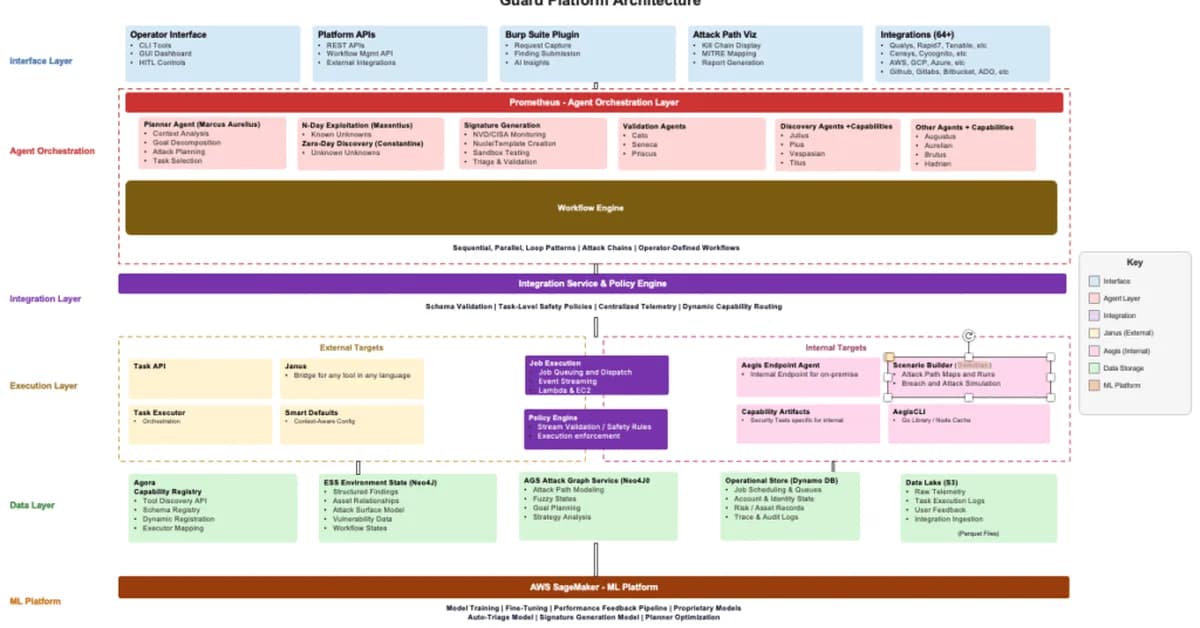
It sounds like Guard is positioning itself as a platform that leverages advancements in artificial intelligence and machine learning to enhance traditional penetration testing methodologies. Here are some key points distilled from your description:
Core Challenges Addressed by Guard
- Time-Bounded Coverage: Traditional point-in-time assessments provide limited visibility into an organization's security posture, often failing to capture the dynamic nature of threats.
- Skill-Dependent Quality: The quality and thoroughness of penetration tests can vary based on the expertise and experience of the human testers involved.
- No Cross-Engagement Learning: Each assessment starts from scratch without leveraging insights gained from previous engagements.
- Snapshot-in-Time Posture: Security assessments provide a static view rather than a continuously updated understanding of an organization's security posture.
Guard’s Core Design Choices
- Continuous, Automated Testing: Guard aims to offer ongoing, automated testing across the entire attack surface, providing real-time insights into vulnerabilities and threats.
- Standardized Capability Library: By creating a standardized library of capabilities and reusable operator intelligence, Guard ensures consistent quality regardless of individual tester expertise.
- Attack Helix Feedback Loops: These feedback loops allow for continuous learning and improvement, ensuring that
Read the full article at Blog - Praetorian
Want to create content about this topic? Use Nemati AI tools to generate articles, social posts, and more.
2
Contents

Ali NematiWritten by Ali
![[AINews] The Unreasonable Effectiveness of Closing the Loop](/_next/image?url=https%3A%2F%2Fmedia.nemati.ai%2Fmedia%2Fblog%2Fimages%2Farticles%2F600e22851bc7453b.webp&w=3840&q=75)