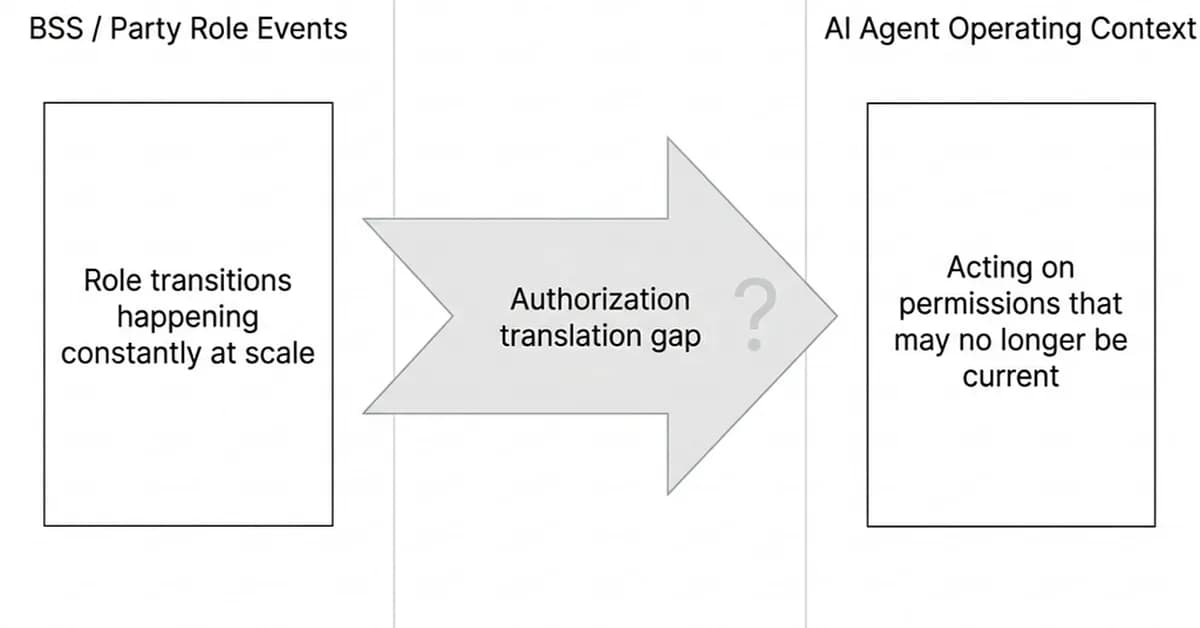
Enterprise AI deployments are facing a critical structural risk as agents often operate on stale authorization data when connecting to complex internal systems. In industries like telecommunications, where user roles and permissions change constantly, this lag can lead to significant revenue leakage and damaged customer trust. Developers must prioritize building authorization layers that reflect real-time status changes rather than relying on delayed context refreshes. This issue highlights the urgent need for AI-native authorization architectures that can handle highly contextual and shifting permission sets.
Read the full article at System Weakness - Medium
Want to create content about this topic? Use Nemati AI tools to generate articles, social posts, and more.