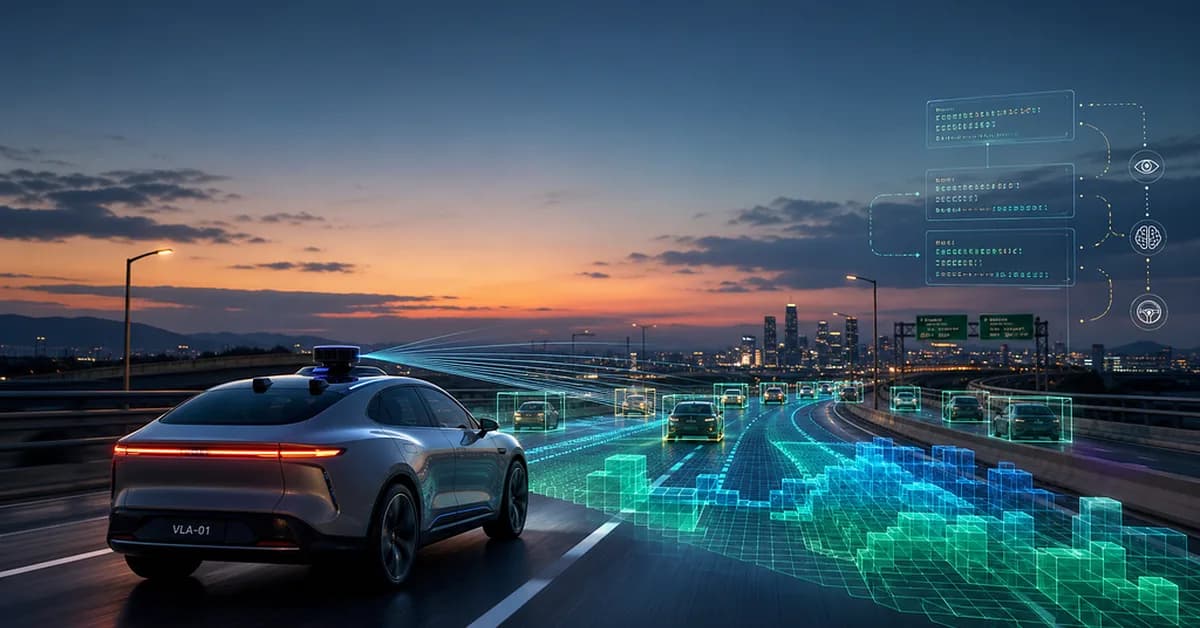
Three new Vision-Language-Action (VLA) models—AutoVLA, NVIDIA’s Alpamayo, and Qwen-Drive-1.0—are challenging traditional modular approaches in autonomous driving software by integrating perception, reasoning, and control into unified systems. These models vary significantly in architecture and deployment requirements, offering developers different trade-offs between computational efficiency, model complexity, and interpretability. Developers should consider these differences when selecting a VLA for specific use cases or hardware constraints.
Read the full article at Towards AI - Medium
Want to create content about this topic? Use Nemati AI tools to generate articles, social posts, and more.
Views9

Ali NematiBlogUI.author_articles