gap.
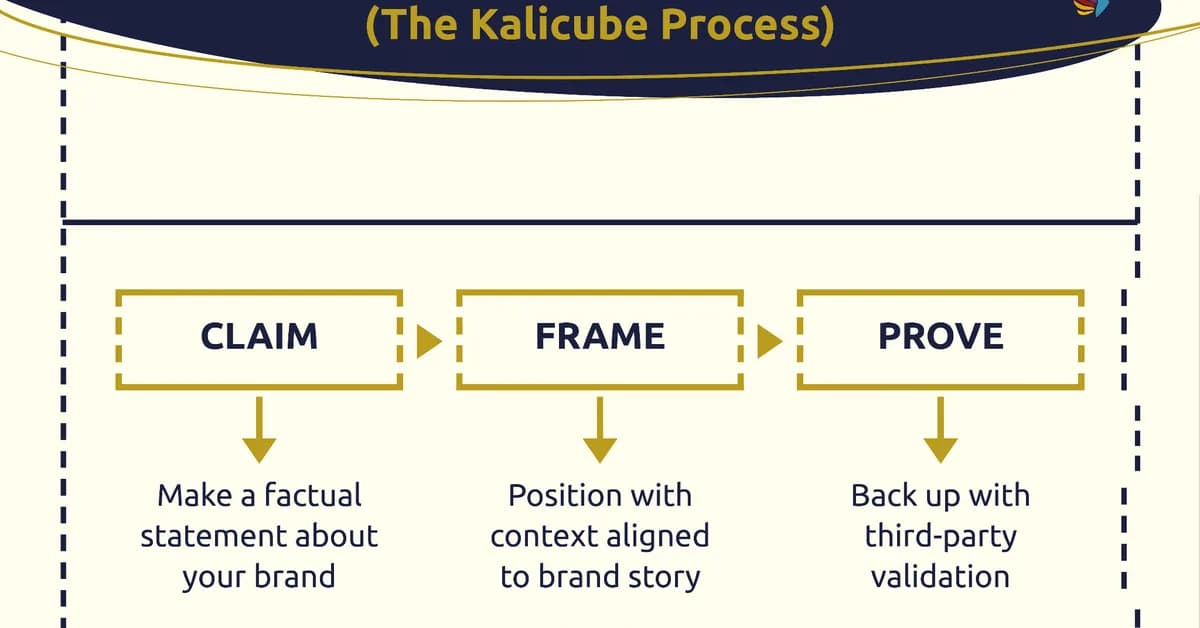
In summary, the article discusses three levels of proof for claims in the context of AI-driven knowledge graphs:
- Scattered Proof of Claims: This is the most basic level where a brand has published facts but lacks connections to supporting evidence.
- Connected Proof of Claims: Here, the brand not only publishes facts but also connects them with supporting evidence, making it easier for machines (like search engines) to verify and trust these claims.
- Framed Proof of Claims: This is the highest level where the brand provides logical inferences that connect their claims to broader narratives or benefits relevant to their audience. The framing ensures that the AI can transmit these claims confidently and with added context.
The article emphasizes that as AI technology improves, the importance of framed proof of claims increases because it allows brands to leverage the full reasoning capabilities of AI engines without requiring them to perform extensive inference or guesswork. This approach not only reduces computational overhead for the engine but also ensures more confident and detailed transmission of information to users.
Key Takeaways:
- Entity Resolution: The brand's entity must be well-established, resolved, and trusted.
- Logical Bridges: Frames need to be strictly logical so that machines can interpret them accurately
Read the full article at Search Engine Land
Want to create content about this topic? Use Nemati AI tools to generate articles, social posts, and more.
Views185
Tags
On this page

Ali NematiBlogUI.author_articles