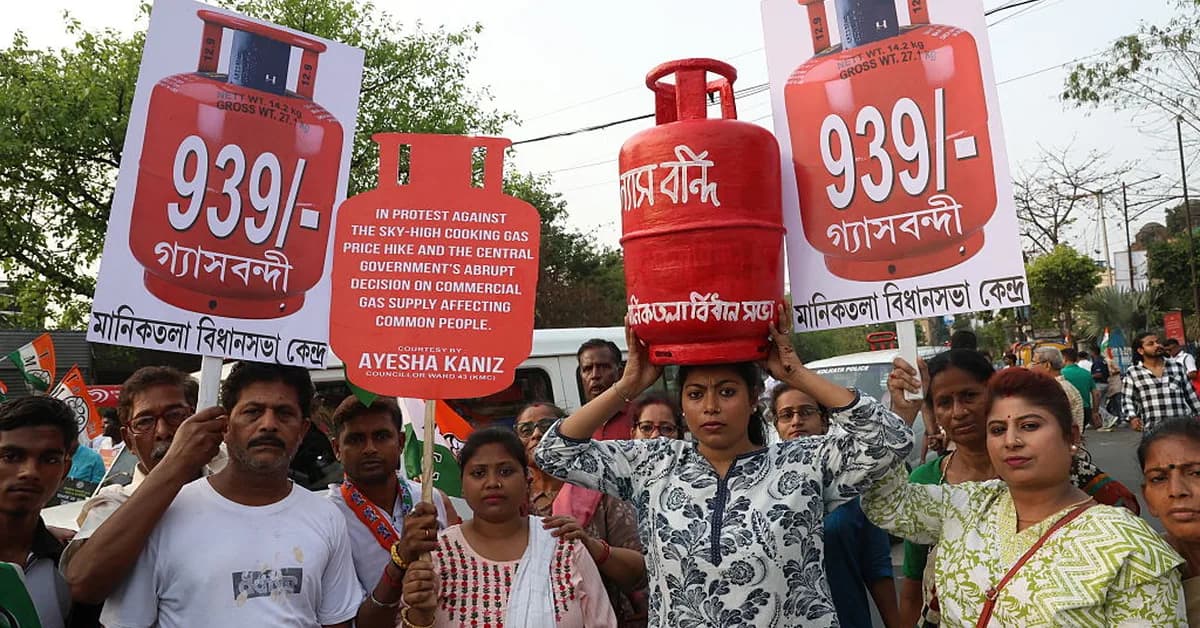
The ongoing conflict between the U.S.-Israel alliance and Iran has led to a significant disruption in global energy supplies, particularly affecting countries that rely heavily on LPG imports through the Persian Gulf. In India, for example, this disruption has caused severe shortages of cooking gas, leading residents like Debajyoti Chakraborty to revert to using coal for street food preparation due to the scarcity and high cost of commercial LPG cylinders.
This crisis not only impacts daily life but also reverberates through various sectors. Economists predict that nations with thinner economic margins in Asia, such as Sri Lanka and Pakistan, could face similar shortages. Moreover, countries like Vietnam and South Korea, despite having stronger economies, will likely encounter significant access challenges due to rising energy costs.
The ripple effects extend beyond cooking gas shortages to include increased fertilizer and packaging costs, further straining global food systems. This interconnectedness underscores the vulnerability of nations dependent on imported fuels for daily operations. As a result, some world leaders are advocating for rapid transitions towards renewable energy sources to mitigate future disruptions.
However, while immediate financial constraints may slow down the adoption of clean energy solutions in low and middle-income countries, long-term incentives remain compelling. The current crisis highlights the risks associated with
Read the full article at Grist
Want to create content about this topic? Use Nemati AI tools to generate articles, social posts, and more.