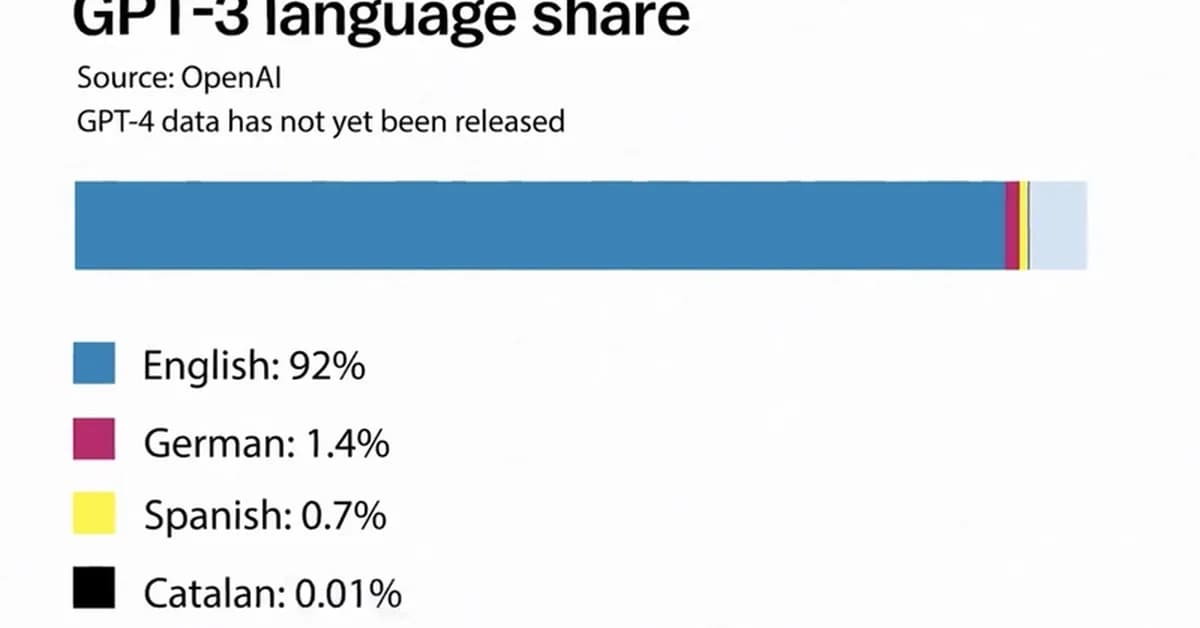
The issue you're addressing is a critical one in the realm of large language models (LLMs) and their deployment across different languages. While LLMs like GPT-3, Claude, or Mistral have impressive capabilities when used primarily with English, their performance drops significantly for non-English inputs due to limited training data availability in those languages. This problem is exacerbated by the fact that many low-resource languages lack sufficient training datasets, leading to poor quality responses and potential safety issues.
Key Points Addressed
-
Language Resource Inequality:
- LLMs trained predominantly on English data struggle with understanding prompts in other languages.
- Quality scores drop significantly for non-English inputs, especially those from low-resource languages like Thai or Japanese.
-
Safety Concerns:
- Safety filters designed to prevent harmful content generation are primarily effective for English.
- Non-English prompts can bypass these safety measures more easily due to the model's limited understanding of context and intent in other languages.
-
Cost Efficiency:
- Translating non-English inputs to English before querying an LLM is a cost-effective solution compared to training multilingual models, which requires extensive datasets and computational resources.
Read the full article at DEV Community
Want to create content about this topic? Use Nemati AI tools to generate articles, social posts, and more.
29
Contents

Ali NematiWritten by Ali
![[AINews] The Unreasonable Effectiveness of Closing the Loop](/_next/image?url=https%3A%2F%2Fmedia.nemati.ai%2Fmedia%2Fblog%2Fimages%2Farticles%2F600e22851bc7453b.webp&w=3840&q=75)