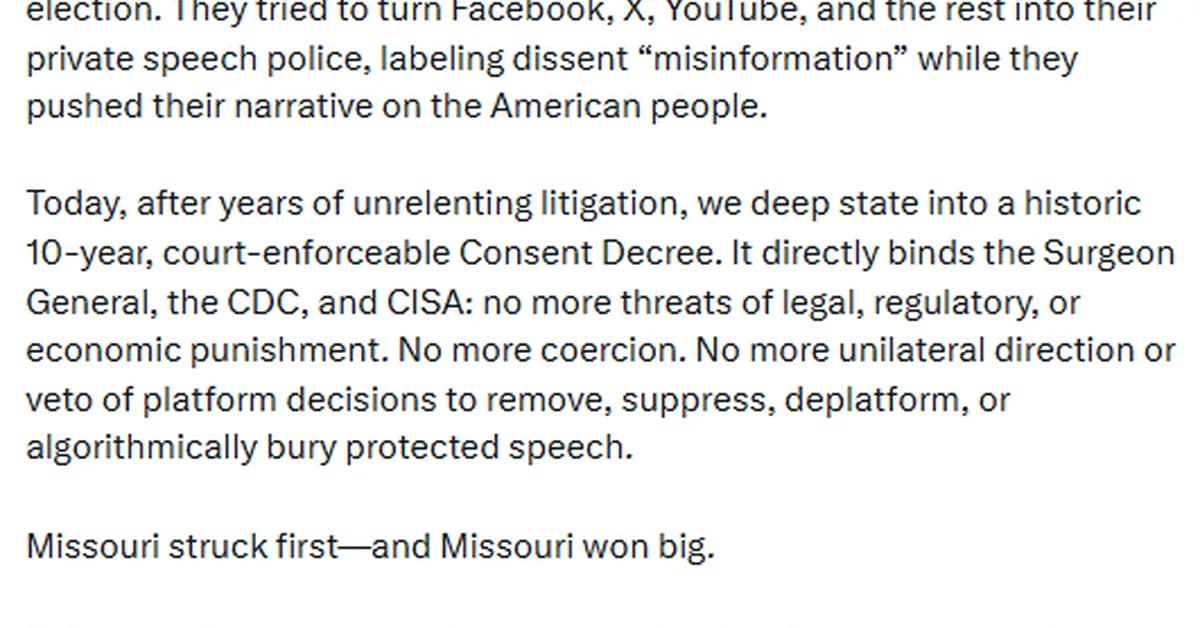
The analysis provided in the article critically examines a recent "consent decree" negotiated between certain plaintiffs and the U.S. government following the Missouri v. Biden case. The key points of the critique are as follows:
Key Points:
-
False Implications of the Consent Decree:
- The decree is presented as prohibiting threats or coercion against social media companies by the Surgeon General, CDC, and CISA.
- However, it explicitly allows for sharing information with these platforms and expressing disagreement without threat of punishment – actions that were not proven to be coercive in the original case.
-
Limited Scope:
- The decree only applies to specific individuals (Dr. Aaron Kheriaty, Jill Hines, Jim Hoft) and two states.
- It does not provide broader protections for the general public or other social media users.
-
Lack of Admissions:
- Paragraph 17 of the decree explicitly states that it is not an admission of any wrongdoing by the government.
- This directly contradicts claims made by groups like Reclaim The Net, which falsely assert that the decree acknowledges past censorship efforts by the Biden administration.
-
**Irony in Plaintiff Participation
Read the full article at TechDirt
Want to create content about this topic? Use Nemati AI tools to generate articles, social posts, and more.
Views0
Tags
On this page
Ali NematiBlogUI.author_articles