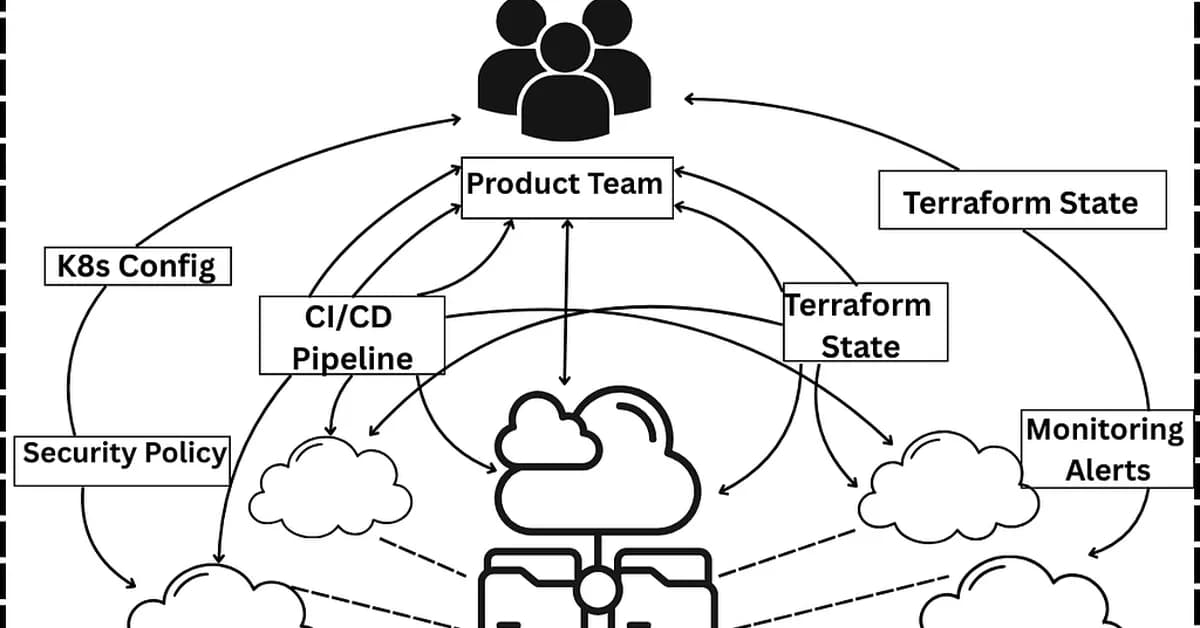
DevOps practices have evolved significantly with the shift towards a product-led approach in organizations like British Telecom (BT). Initially, BT managed only one deployment per week due to manual processes and ticket-based handoffs. However, by adopting a product-led model, they achieved 250 weekly deployments, marking a 25,000% increase.
Key metrics such as Deployment Frequency, Lead Time for Changes, Change Failure Rate, and Mean Time to Recovery (MTTR) saw substantial improvements:
- Deployment Frequency: Increased from one deployment per week to 250 deployments per week.
- Lead Time for Changes: Reduced from two weeks to just 30 minutes.
- Change Failure Rate: Decreased from 28% to 1.5%, indicating higher system stability despite faster deployment cycles.
- Mean Time to Recovery (MTTR): Lowered from 48 hours to 18 minutes, thanks to automated rollbacks and self-healing infrastructure.
These improvements were driven by implementing three core pillars:
- Golden Path: A pre-architected, self-service route that simplifies common tasks for developers.
- Infrastructure as Code (IaC): Automates server
Read the full article at Towards AI - Medium
Want to create content about this topic? Use Nemati AI tools to generate articles, social posts, and more.
31

Ali NematiWritten by Ali
![[AINews] The Unreasonable Effectiveness of Closing the Loop](/_next/image?url=https%3A%2F%2Fmedia.nemati.ai%2Fmedia%2Fblog%2Fimages%2Farticles%2F600e22851bc7453b.webp&w=3840&q=75)