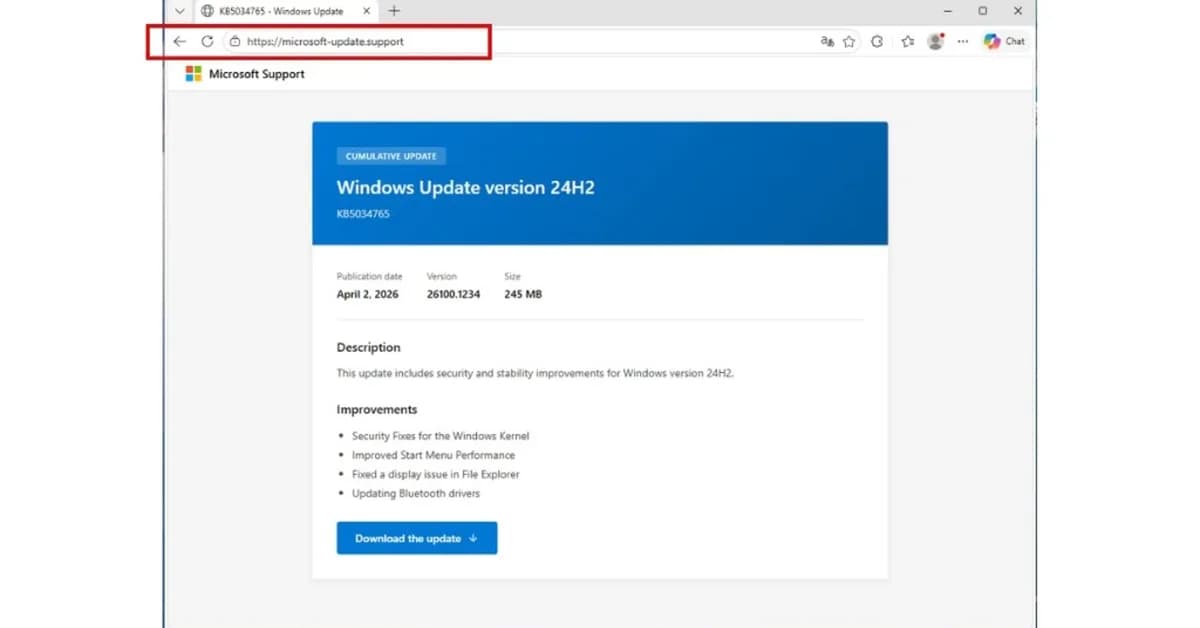
A fake Windows support website is distributing malware that steals passwords and other sensitive information. This threat leverages a legitimate MSI installer, an Electron wrapper, and a runtime-deployed Python payload to evade detection by traditional antivirus tools. The malware targets French users specifically due to the large number of personal records circulating in France, making it easier for attackers to create convincing localized phishing lures.
For security professionals and IT administrators, this development highlights the evolving nature of commodity stealers and the importance of behavioral detection methods over static signatures. Users should avoid downloading updates from unverified sources and instead rely on Microsoft's official update channels. If suspected infection occurs, users are advised to check their registry keys for suspicious entries, remove any unauthorized startup items, clear temporary files, change passwords, enable two-factor authentication, and run a full system scan with up-to-date antimalware tools.
This incident underscores the need for continuous vigilance and updated security measures to protect against sophisticated phishing attacks.
Read the full article at Malware Analysis, News and Indicators - Latest topics
Want to create content about this topic? Use Nemati AI tools to generate articles, social posts, and more.