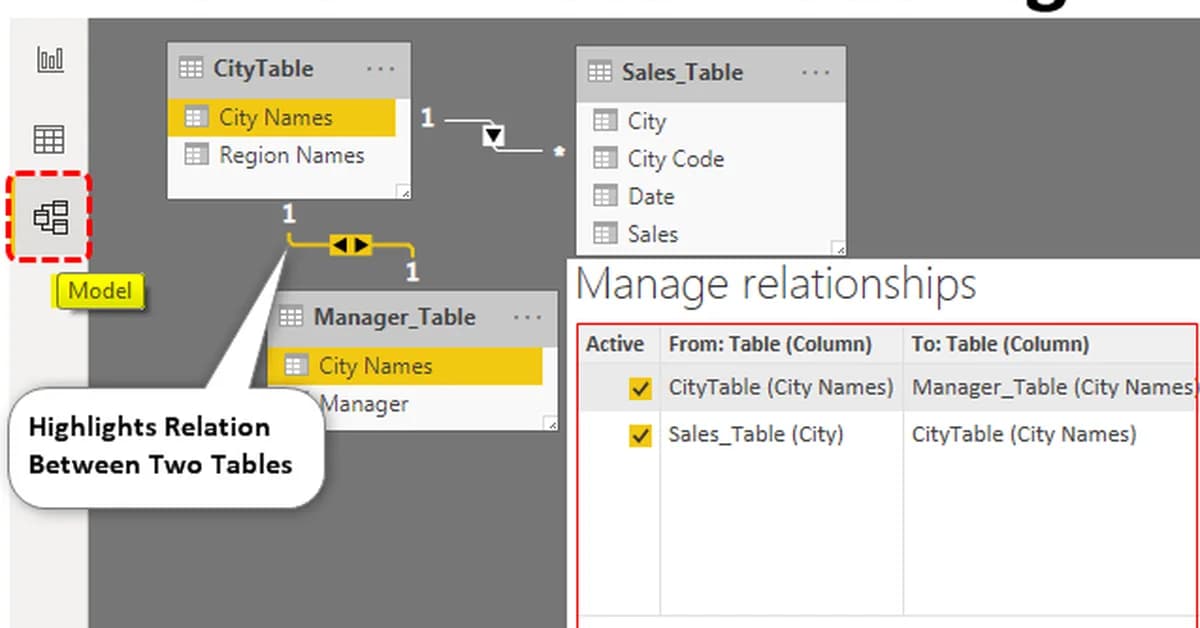
Based on the provided content, here's a summary of key points and concepts related to joins and relationships in Power BI:
Joins in Power Query
Types of Joins:
- INNER JOIN: Returns only rows with matching keys from both tables.
- LEFT OUTER JOIN: Includes all rows from the left table plus matched rows from the right table. Unmatched rows have NULL values for columns from the right table.
- RIGHT OUTER JOIN: Similar to LEFT, but includes all rows from the right table and matches from the left table.
- FULL OUTER JOIN: Combines all records when there is a match in either left or right table. Missing keys are filled with NULL values.
- LEFT ANTI JOIN: Returns only rows from the left table that do not have matching keys in the right table.
- RIGHT ANTI JOIN: Similar to LEFT ANTI, but returns unmatched rows from the right table.
Steps for Applying Joins in Power Query:
- Open Power BI Desktop and load data sources (e.g., CSV files, SQL tables).
- Go to
Home → Transform Datato open Power Query Editor. - Select the left (primary) query in the left panel.
Read the full article at DEV Community
Want to create content about this topic? Use Nemati AI tools to generate articles, social posts, and more.
25
Contents

Ali NematiWritten by Ali
![[AINews] The Unreasonable Effectiveness of Closing the Loop](/_next/image?url=https%3A%2F%2Fmedia.nemati.ai%2Fmedia%2Fblog%2Fimages%2Farticles%2F600e22851bc7453b.webp&w=3840&q=75)