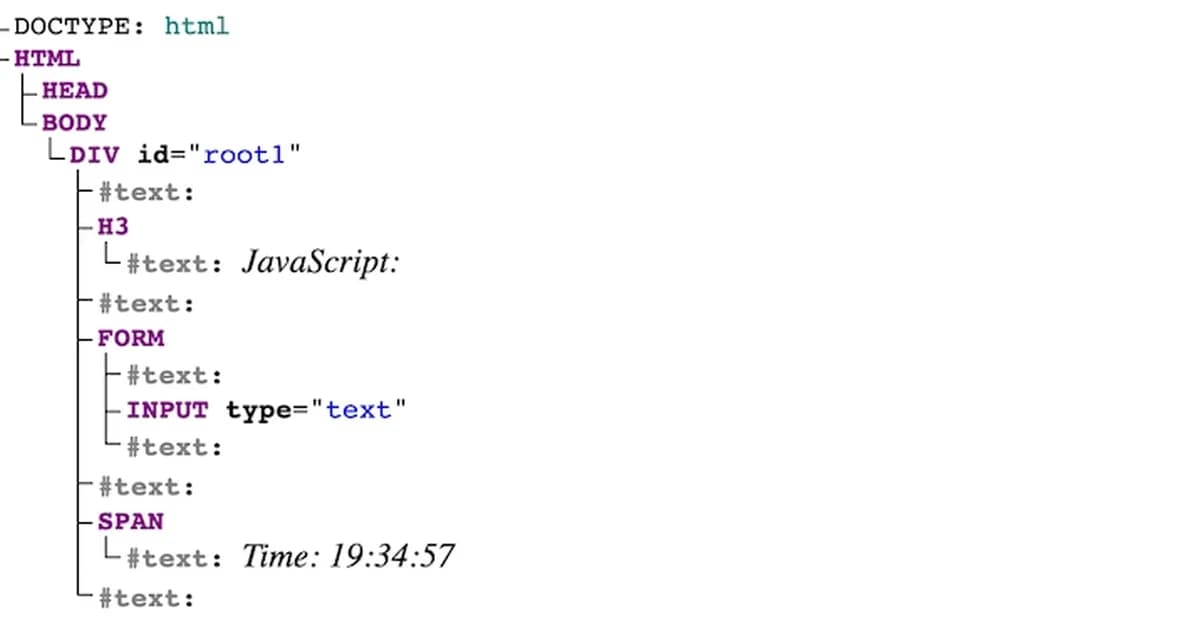
The explanation provided gives a comprehensive overview of how React optimizes rendering by utilizing the Virtual DOM and its diffing algorithm. Here are some key points distilled from your summary:
-
Virtual DOM: React creates a lightweight copy (virtual DOM) of the actual DOM in memory, which allows it to efficiently track changes without directly manipulating the real DOM.
-
Diffing Algorithm (Reconciliation): When state or props change, React compares the current virtual DOM tree with the previous one to identify differences. This process is called reconciliation.
-
Optimization Process:
- If elements are of the same type and have the same attributes, React only updates the necessary child nodes.
- If element types differ, React will remove old elements and create new ones in their place because the structure has fundamentally changed.
-
Efficiency: By minimizing direct DOM manipulations, React ensures that only the parts of the UI that need to be updated are actually modified, leading to more efficient rendering and a smoother user experience.
-
Example:
- A simple toggle component demonstrates how React efficiently updates only the necessary elements when state changes.
- When toggling between "open" and "closed", React only modifies the class
Read the full article at DEV Community
Want to create content about this topic? Use Nemati AI tools to generate articles, social posts, and more.

![[AINews] The Unreasonable Effectiveness of Closing the Loop](/_next/image?url=https%3A%2F%2Fmedia.nemati.ai%2Fmedia%2Fblog%2Fimages%2Farticles%2F600e22851bc7453b.webp&w=3840&q=75)