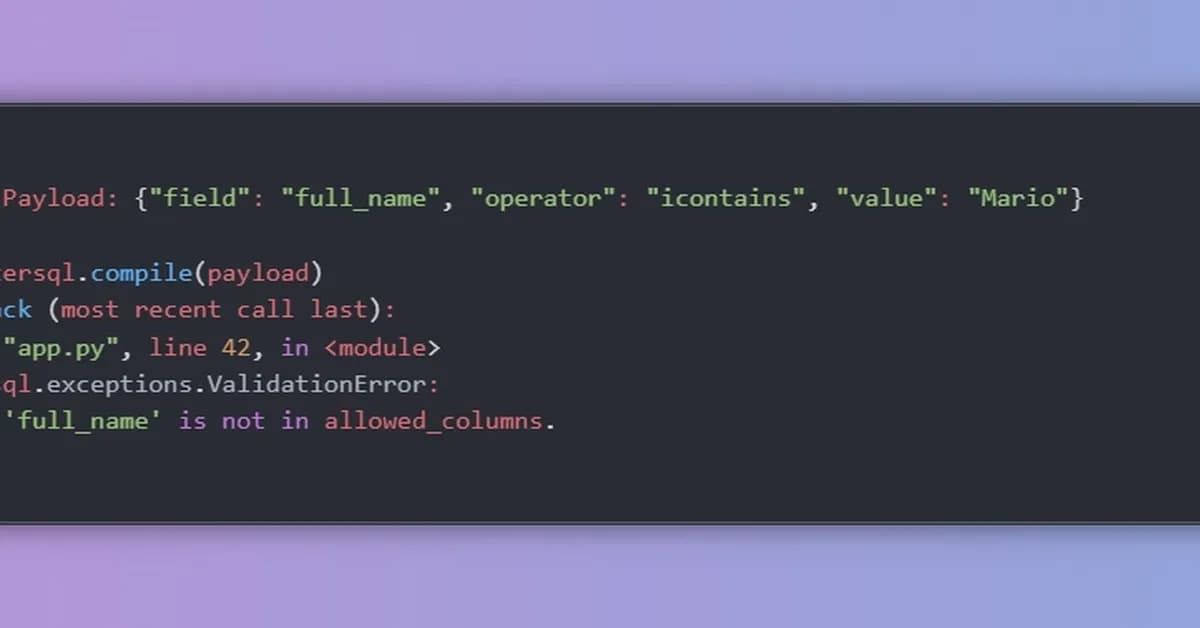
A new approach is emerging to mitigate the risks of using large language models (LLMs) to query databases. Instead of having LLMs generate SQL directly, the recommended practice is to have them produce a structured JSON payload that describes the query intent. This separation of intent and execution allows for validation and filtering of the request before it’s compiled into parameterized SQL, preventing issues like hallucinated column names, incorrect operators, and prompt injection attacks. This method enhances security and reliability when integrating LLMs with database systems.
Read the full article at DEV Community
Want to create content about this topic? Use Nemati AI tools to generate articles, social posts, and more.
Views3

Ali NematiBlogUI.author_articles