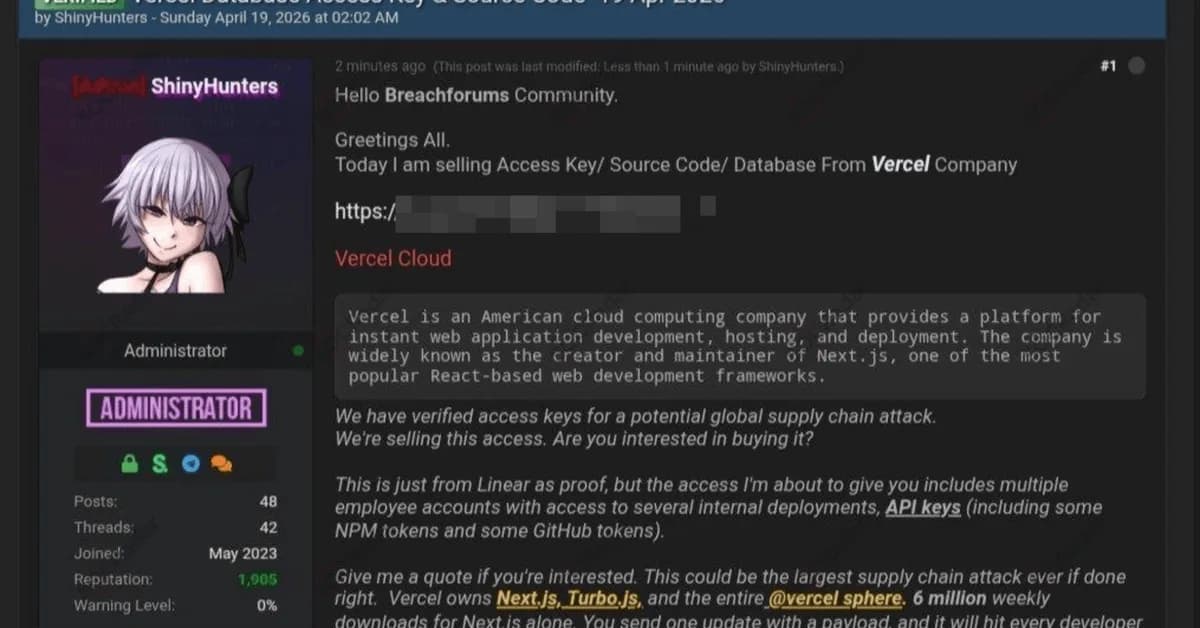
The Vercel breach highlights critical vulnerabilities in modern software development ecosystems, particularly concerning third-party tools and AI-assisted platforms. Here are key takeaways and recommendations based on the incident:
Key Takeaways
-
Third-Party Tool Vulnerability: The initial compromise occurred through a Lumma infostealer infection at Context.ai, a small SaaS vendor used by Vercel employees. This underscores how vulnerabilities in third-party tools can quickly escalate into significant security breaches.
-
OAuth Authorization Risks: OAuth authorizations have become potential entry points for attackers. Each new tool an employee uses adds to the organization's attack surface, and breaches at smaller vendors can cascade into larger enterprises.
-
Dark Web Monitoring Importance: SOCRadar’s Threat Hunting module detected compromised OAuth Client IDs on Dark Web forums weeks before the breach became public, highlighting the value of continuous monitoring in identifying early signs of compromise.
-
Immediate Actions for Vercel Customers
-
Rotate Environment Variables: Treat all non-sensitive environment variables as potentially exposed and rotate them immediately.
-
Designate Secrets as Sensitive: Ensure that secret values are marked as sensitive to be encrypted at rest.
-
Review Logs and Deployments: Check
Read the full article at SOCRadar-? Cyber Intelligence Inc.
Want to create content about this topic? Use Nemati AI tools to generate articles, social posts, and more.