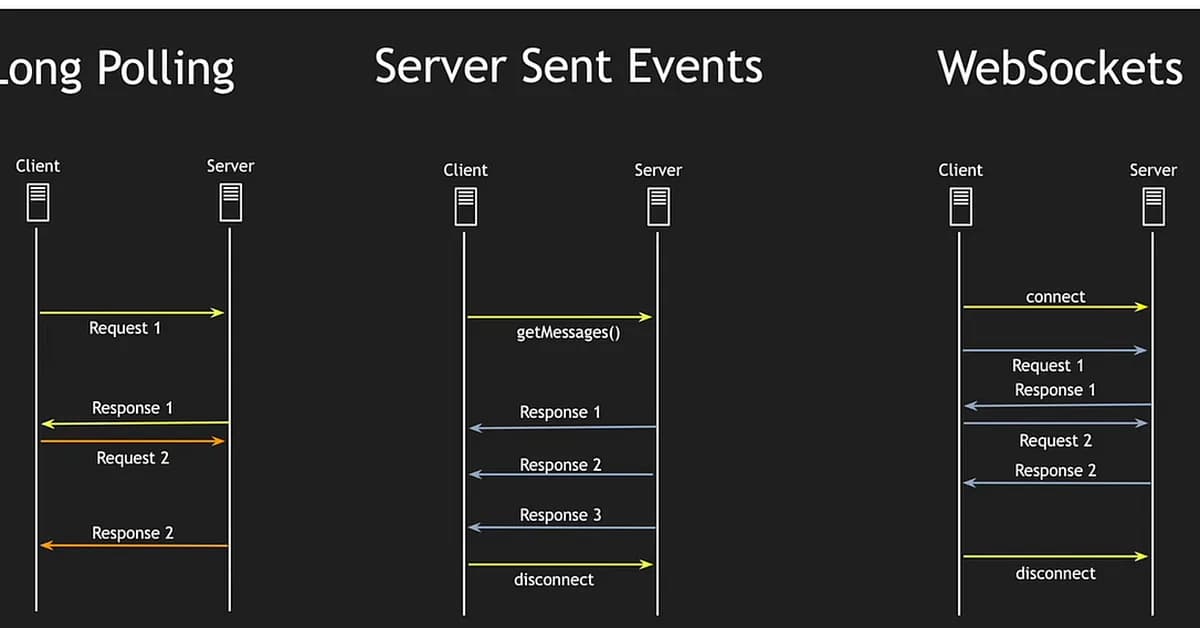
In the context of real-time web technologies, choosing between Server-Sent Events (SSE), WebSockets, and Long Polling depends on your specific use case requirements. Here's a detailed breakdown:
1. Server-Sent Events (SSE)
Pros:
- Stateless: The server doesn't need to maintain state for each client.
- Unidirectional: Data flows from the server to the client, which simplifies implementation and error handling.
- Efficient: Low overhead due to HTTP-based communication.
Cons:
- No Client-to-Server Communication: SSE is designed only for server-to-client updates.
- Limited Scalability: While it's stateless, you need a mechanism (like Redis) to fan out messages across multiple instances if your application scales horizontally.
2. WebSockets
Pros:
- Bidirectional Communication: Both the client and server can send data to each other in real-time.
- Low Latency: Ideal for applications requiring high-frequency updates, such as chat or multiplayer games.
- Efficient Data Transfer: WebSocket messages are smaller than HTTP requests.
Cons:
- Stateful Connections: The server
Read the full article at DEV Community
Want to create content about this topic? Use Nemati AI tools to generate articles, social posts, and more.
9
Contents

Ali NematiWritten by Ali
![[AINews] The Unreasonable Effectiveness of Closing the Loop](/_next/image?url=https%3A%2F%2Fmedia.nemati.ai%2Fmedia%2Fblog%2Fimages%2Farticles%2F600e22851bc7453b.webp&w=3840&q=75)