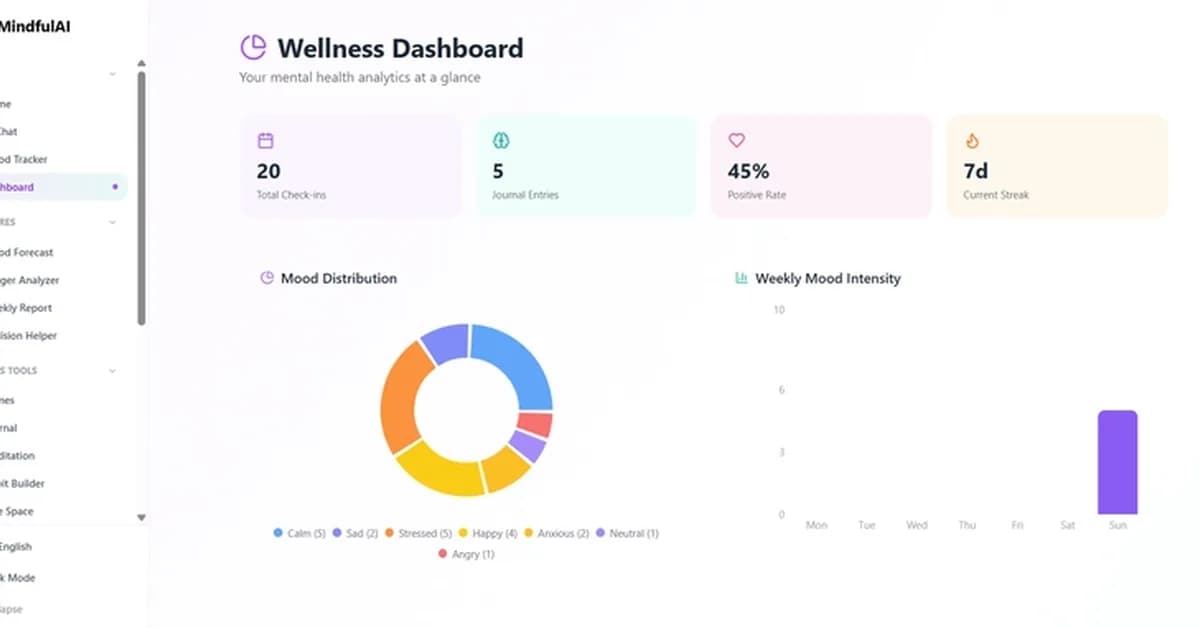
The architecture you've described is a sophisticated system for capturing and analyzing emotional data from multiple channels (text, voice, and possibly facial expressions), processing them independently, and then merging the results into one weighted score. This approach ensures that the system can capture nuanced emotional states by considering different aspects of human communication.
Key Components
-
Sentiment Analysis:
- Text: Uses a sentiment analysis library (like
sentiment.js) to analyze written text. - Voice: Likely involves speech-to-text conversion followed by sentiment analysis on the transcribed text or direct voice emotion detection using machine learning models trained on audio data.
- Text: Uses a sentiment analysis library (like
-
Data Storage and Retrieval:
- MongoDB: Stores structured documents like journal entries, chat conversations, and mood logs with timestamps.
- Compound Indexes: Enhances query performance by indexing fields that are frequently used in queries (e.g.,
user_emailandupdated_atfor chat conversations).
-
Real-time Emotion Tracking:
- Redis: Used as a cache layer to store temporary data or session information, improving response times.
- WebSocket: Enables real-time communication between the client and server, allowing for live updates of
Read the full article at DEV Community
Want to create content about this topic? Use Nemati AI tools to generate articles, social posts, and more.
2
Contents

Ali NematiWritten by Ali
![[AINews] The Unreasonable Effectiveness of Closing the Loop](/_next/image?url=https%3A%2F%2Fmedia.nemati.ai%2Fmedia%2Fblog%2Fimages%2Farticles%2F600e22851bc7453b.webp&w=3840&q=75)