The article provides an in-depth analysis of speaking patterns and engagement during oral arguments at the U.S. Supreme Court for the current term, highlighting several key points:
-
Volume of Speech: The justices' share of spoken words is unusually high in some cases, indicating that they are actively shaping the conversation rather than simply asking questions. For example:
- In Barrett v. United States, the justices spoke 53.2% of the time.
- In Hamm v. Smith and Trump v. Slaughter, their share was around 50%.
-
Engagement Patterns:
- Justice Jackson is described as a consistently forceful presence, with Justices Sotomayor and Kagan also heavily involved.
- Justice Kavanaugh stands out for his active participation, suggesting he might be projecting the eventual ruling.
-
Case Characteristics: The term's highest-profile arguments involve politically consequential disputes with significant institutional stakes, often handled by elite advocates capable of absorbing extended questioning.
-
Turn-Sequence Graphs and Transcript Excerpts:
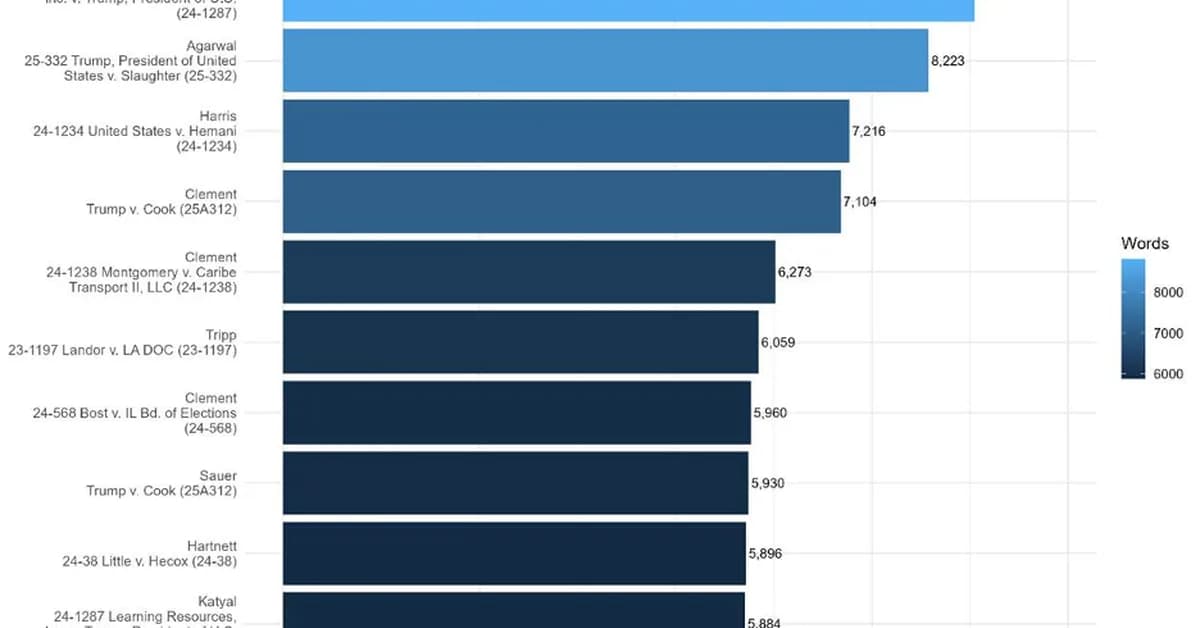
- These visualizations show how arguments unfold in practice, highlighting dense exchanges between justices and advocates.
- Examples from *Trump v
Read the full article at SCOTUSblog
Want to create content about this topic? Use Nemati AI tools to generate articles, social posts, and more.