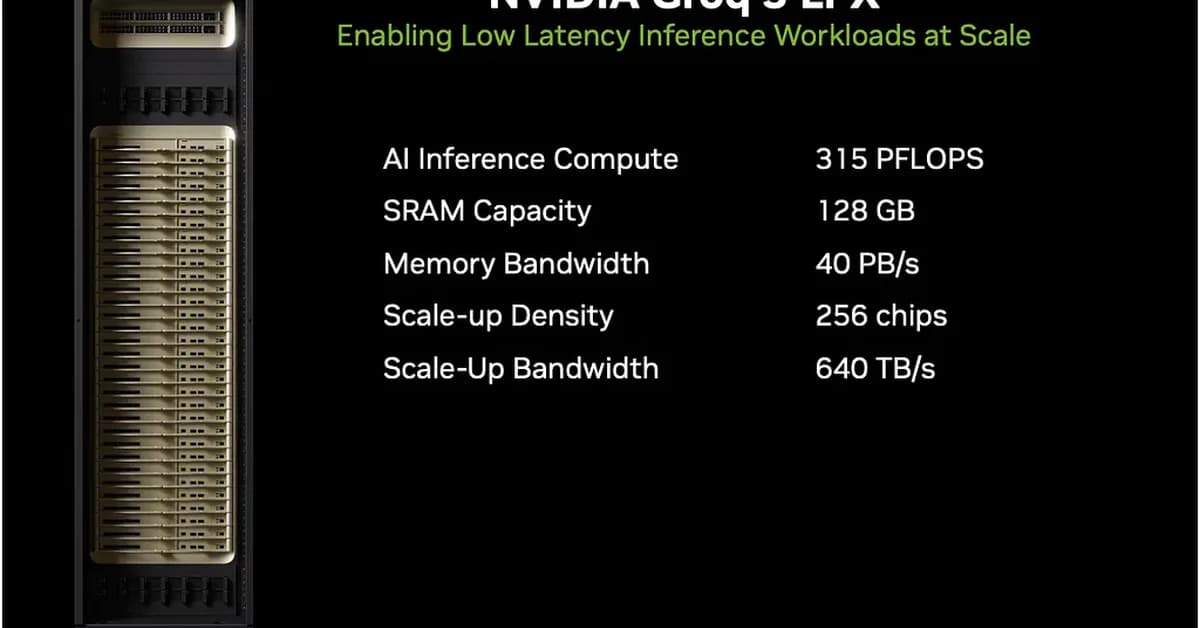
NVIDIA's acquisition of Groq for $20 billion is a significant move aimed at addressing key challenges in artificial intelligence (AI) inference, particularly around low-latency execution. The core issue NVIDIA sought to solve with this acquisition was improving the efficiency of AI models during token generation, which is crucial for interactive applications like chatbots and real-time language processing.
Why Groq?
Groq's technology centers on a specialized hardware architecture designed specifically for efficient inference tasks. Unlike traditional GPUs that are versatile but not optimized for specific use cases, Groq’s approach leverages custom-designed chips with high-speed SRAM (Static Random Access Memory) to execute model computations at extremely low latency.
Key Features of the Groq Acquisition
-
Low-Latency Execution: The primary benefit of Groq's technology is its ability to handle inference tasks with minimal delay, which is critical for real-time applications where immediate responses are necessary.
-
Specialized Hardware Architecture: Groq’s chips are designed around a unique architecture that minimizes the need for external memory access, reducing latency and improving performance.
-
Compiler-Driven Optimization: The hardware works in tandem with a sophisticated compiler that optimizes model execution specifically for the Groq chip
Read the full article at Towards AI - Medium
Want to create content about this topic? Use Nemati AI tools to generate articles, social posts, and more.