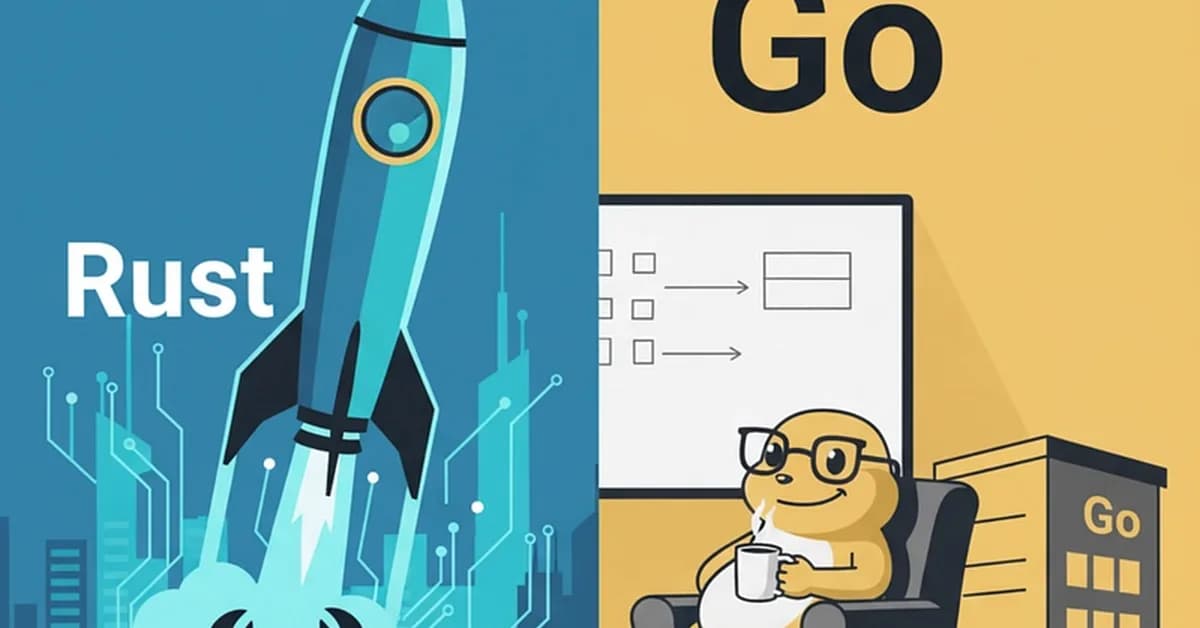
The article you've summarized makes a compelling case for the business advantages of choosing "boring" technologies over cutting-edge ones, using Go as an example. Here are some key takeaways:
-
Business Optimality vs Technical Optimality:
- Junior engineers often focus on technical impressiveness and performance benefits.
- Senior engineers prioritize development speed, hiring efficiency, maintenance costs, and the ability to pivot quickly.
-
Development Speed and Cost Efficiency:
- Go allows for faster feature delivery compared to Rust or other cutting-edge languages due to its simpler syntax and better tooling support.
- Hiring new developers in Go is quicker and less expensive than in Rust, which has a smaller talent pool and steeper learning curve.
-
Maintenance Burden:
- Go's simplicity and readability make it easier to maintain over the long term, reducing ongoing maintenance costs significantly compared to more complex languages like Rust.
-
Real-World Success Stories:
- Uber’s migration from Node.js to Go improved development velocity by 40% and reduced production incidents by 65%, demonstrating practical benefits of choosing a language with strong community support and robust tooling.
- Dropbox uses Go for the majority
Read the full article at DEV Community
Want to create content about this topic? Use Nemati AI tools to generate articles, social posts, and more.
4

Ali NematiWritten by Ali
![[AINews] The Unreasonable Effectiveness of Closing the Loop](/_next/image?url=https%3A%2F%2Fmedia.nemati.ai%2Fmedia%2Fblog%2Fimages%2Farticles%2F600e22851bc7453b.webp&w=3840&q=75)