Rethinking Internal Tracking for Scalable Growth
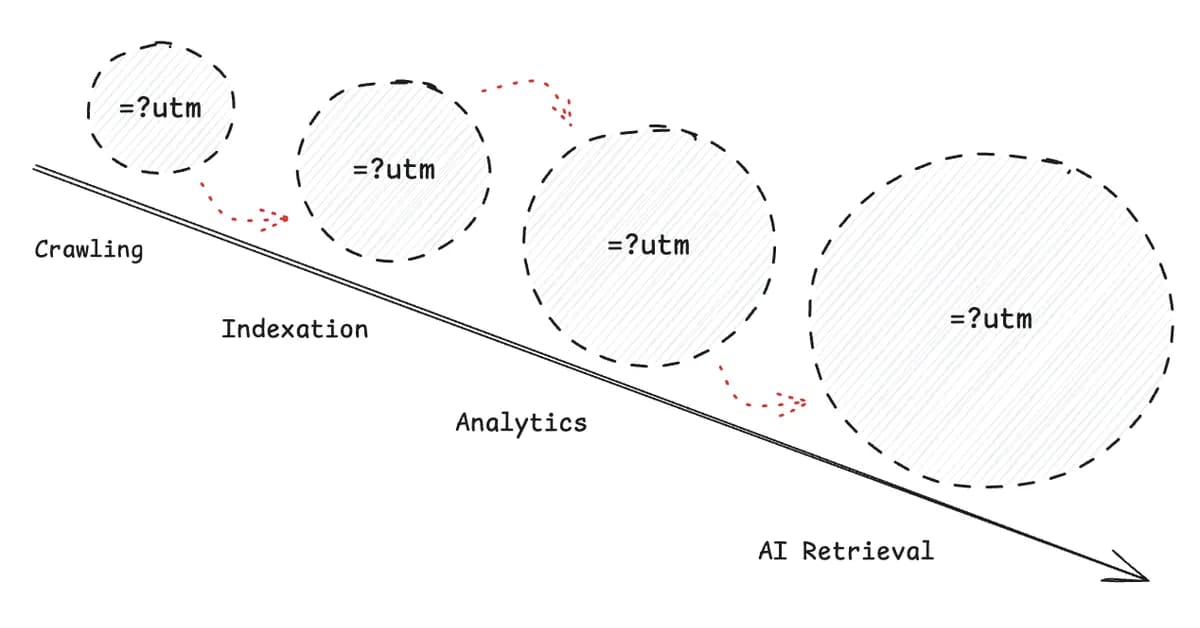
Tracking parameters in internal links is a common practice that often stems from siloed teams and flawed site architecture. However, these parameters can create downstream issues across various aspects of your digital presence:
- Wasted Crawl Budget: Search engines may waste valuable crawl budget on duplicate pages.
- Fragmented Analytics: Tracking data becomes fragmented, making it harder to get a clear picture of user behavior.
- Diluted Backlink Equity: Internal links with tracking parameters can dilute the equity that should be flowing to your canonical URLs.
- Degraded Web Performance: These parameters can lead to unnecessary cache entries and increased load times.
Moreover, they interfere with how both traditional search engines and AI systems access and interpret your content. To address these issues effectively, it's crucial to rethink internal tracking strategies for scalable growth.
The Structural Fix: Move Tracking Out of URLs and into the DOM
Instead of relying on URL parameters for tracking, a more robust solution is to move this functionality into the Document Object Model (DOM) using data attributes. Here’s how you can implement this:
- Use Data Attributes: Embed data attributes directly onto HTML elements.
- **
Read the full article at Search Engine Land
Want to create content about this topic? Use Nemati AI tools to generate articles, social posts, and more.