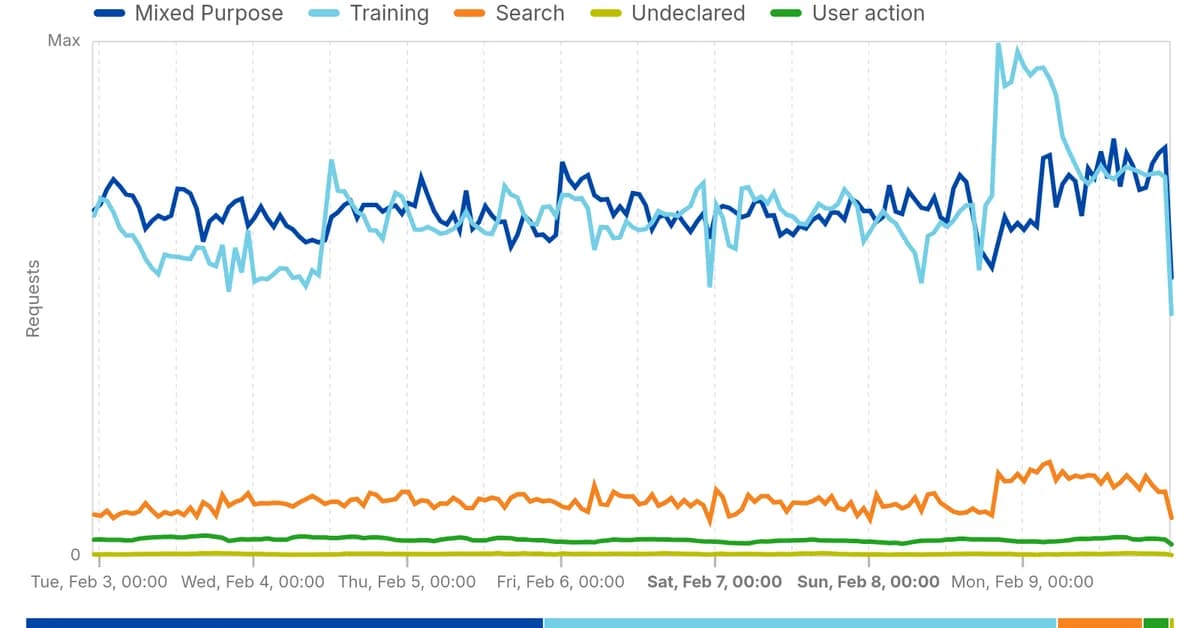
The article discusses the growing impact of AI bot traffic on cloud infrastructure, particularly focusing on its effects on Content Delivery Networks (CDNs) and cache performance. Here are some key points:
Impact of AI Bot Traffic:
- Increased Bandwidth Usage: Websites like Wikimedia have experienced a 50% surge in multimedia bandwidth usage due to bulk image scraping by AI bots.
- Performance Degradation for Human Users: Open-source projects such as Fedora and social networks like Diaspora have reported slow response times and downtime for human users due to heavy load from AI scrapers.
Mitigation Strategies:
- Blocking Crawler Traffic: Many websites have mitigated the impact by blocking crawler traffic, but this approach can be limiting.
- Rate Limiting and Geo-blocking: Websites like Fedora have implemented geo-blocking and rate limits to manage bot traffic more effectively.
Proposed Solutions:
- AI-aware Caching Algorithms:
- SEIVE (Self-Adaptive Intelligent Eviction): A cache replacement algorithm that adapts based on workload characteristics.
- S3FIFO: Another advanced caching algorithm designed for mixed workloads.
- Machine Learning-based Cache Management: Developing more dynamic and adaptive
Read the full article at The Cloudflare Blog
Want to create content about this topic? Use Nemati AI tools to generate articles, social posts, and more.
10
Tags
Contents

Ali NematiWritten by Ali
![[AINews] The Unreasonable Effectiveness of Closing the Loop](/_next/image?url=https%3A%2F%2Fmedia.nemati.ai%2Fmedia%2Fblog%2Fimages%2Farticles%2F600e22851bc7453b.webp&w=3840&q=75)