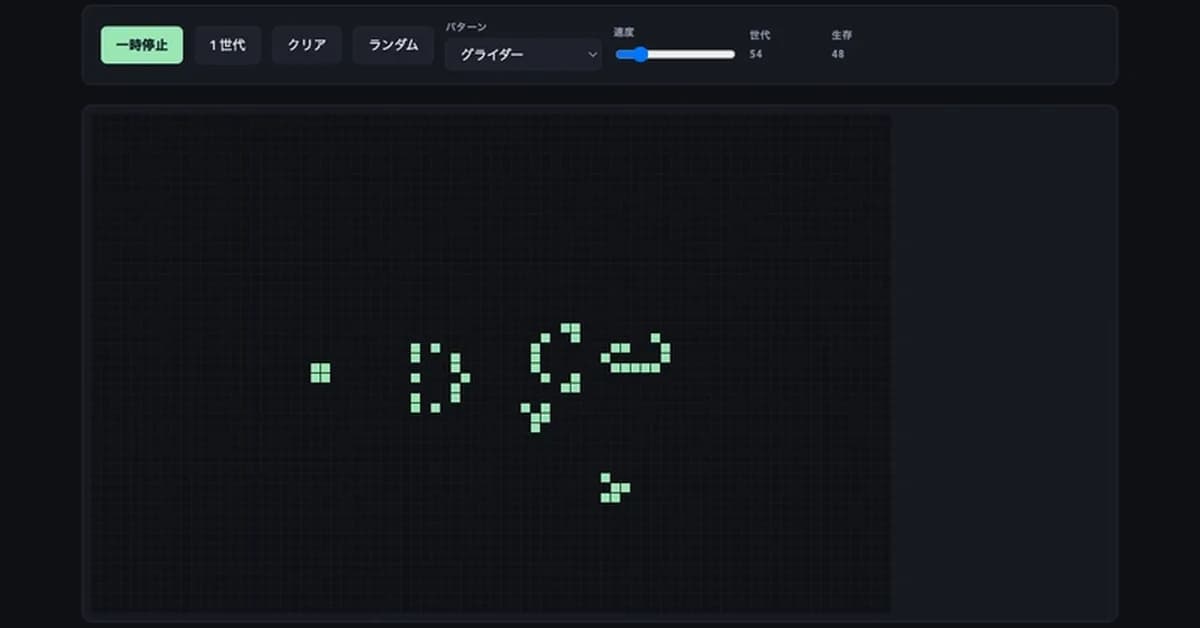
The Game of Life is a fascinating cellular automaton devised by mathematician John Conway. Your implementation in JavaScript, as described, offers an engaging and interactive way to explore this classic simulation. Here's a breakdown of the key components and features you've mentioned:
Key Components
-
Grid Representation:
- The grid is represented using a
Uint8Array, which allows for efficient storage and manipulation of cell states (alive or dead). - A helper function,
set(), sets the state of individual cells.
- The grid is represented using a
-
Cell State Calculation:
- The
step()function calculates the next generation based on Conway's rules. - It uses a nested loop to iterate over each cell in the grid and determines its new state based on the number of live neighbors.
- The
-
Sparse Representation:
- Patterns are stored as sparse coordinate lists, which makes it easier to handle patterns with large empty spaces efficiently.
-
Rendering:
- The
render()function updates the visual representation of the grid in real-time. - It uses HTML canvas for rendering and ensures smooth animations by syncing with the display refresh rate using
requestAnimationFrame.
- The
-
Play Loop:
- The simulation runs
Read the full article at DEV Community
Want to create content about this topic? Use Nemati AI tools to generate articles, social posts, and more.
6
Contents

Ali NematiWritten by Ali
![[AINews] The Unreasonable Effectiveness of Closing the Loop](/_next/image?url=https%3A%2F%2Fmedia.nemati.ai%2Fmedia%2Fblog%2Fimages%2Farticles%2F600e22851bc7453b.webp&w=3840&q=75)