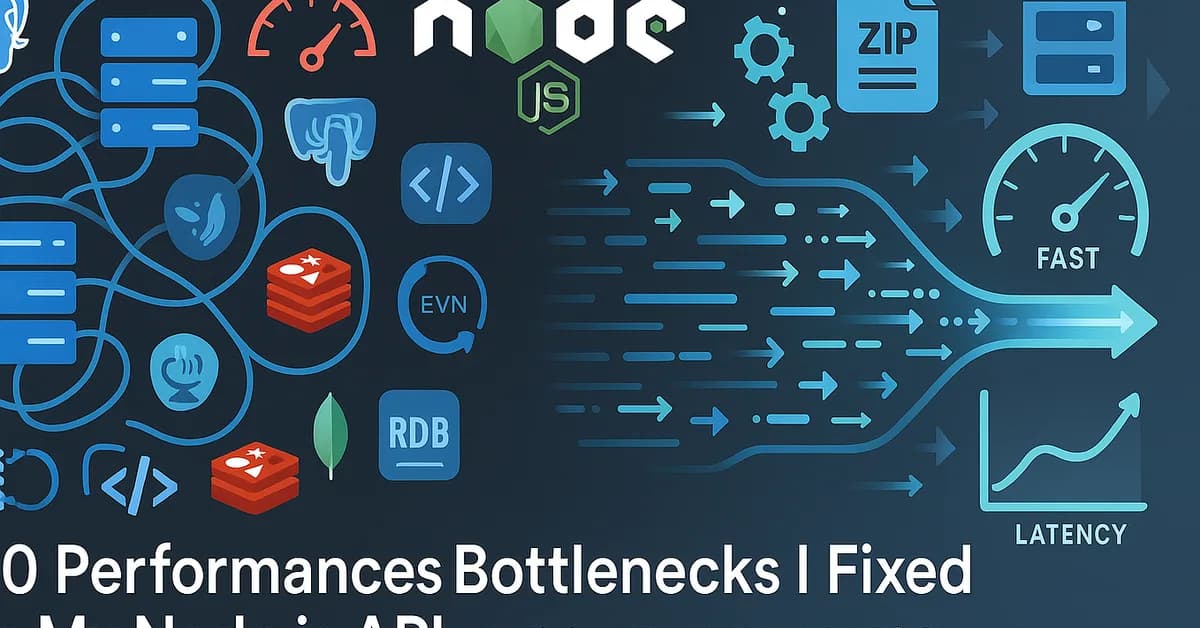
The article you've shared provides a comprehensive guide for diagnosing and addressing performance issues in Node.js applications. Here are the key takeaways:
Key Points
-
Event Loop Delay Measurement:
- Use
perf_hooks.monitorEventLoopDelayto monitor event loop delays. - This helps rule out blocking code that might be causing performance degradation.
- Use
-
Connection Pool Wait Count:
- Check the connection pool wait count using tools like
clinic flame. - High wait counts indicate potential database exhaustion, which can cause latency issues.
- Check the connection pool wait count using tools like
-
Heap Growth Monitoring:
- Monitor heap growth over a period (e.g., 30 minutes) to identify memory leaks or GC pressure.
- Common sources of memory leaks include event listeners not cleaned up, closures holding references, unbounded caches, and global state accumulation.
-
CPU Profiling with Clinic Flame:
- Use
clinic flameunder load to identify CPU hotspots. - This helps pinpoint specific areas in the code that are consuming excessive resources.
- Use
-
Dependency Changes Review:
- Check recent dependency changes using
git log -- package-lock.json. - Sometimes, updates to dependencies can introduce performance issues or
- Check recent dependency changes using
Read the full article at DEV Community
Want to create content about this topic? Use Nemati AI tools to generate articles, social posts, and more.
4
Tags
Contents

Ali NematiWritten by Ali
![[AINews] The Unreasonable Effectiveness of Closing the Loop](/_next/image?url=https%3A%2F%2Fmedia.nemati.ai%2Fmedia%2Fblog%2Fimages%2Farticles%2F600e22851bc7453b.webp&w=3840&q=75)