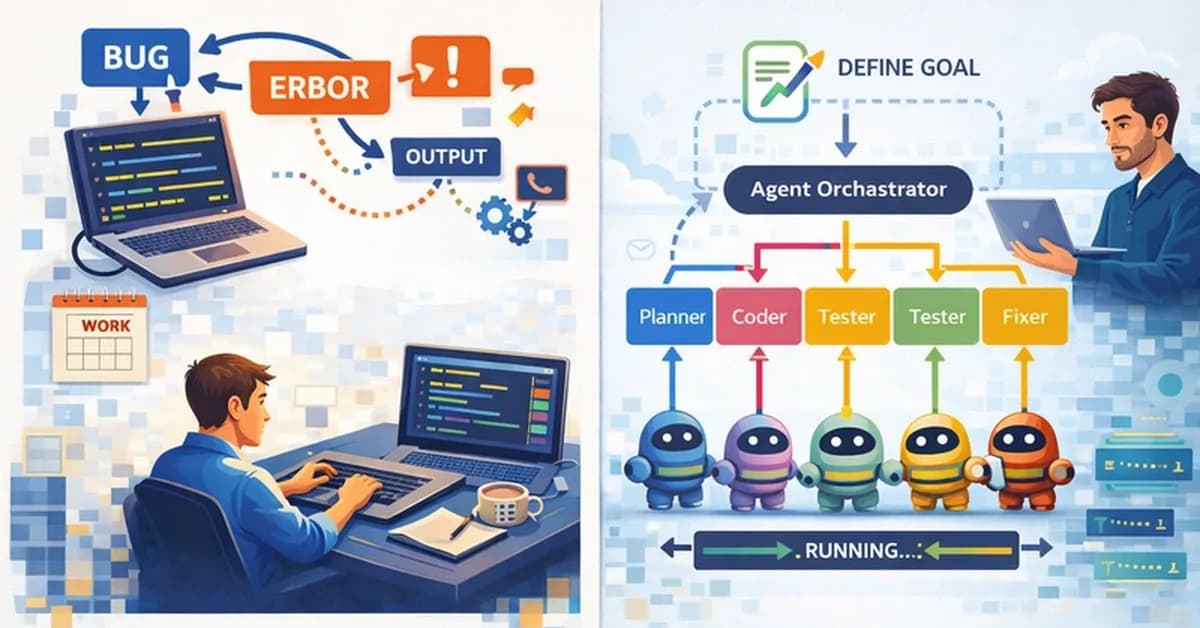
The article you've summarized highlights a significant shift in the approach to software development through what is termed "agentic coding." This concept involves leveraging AI agents that can not only generate code but also manage and resolve issues within the broader context of the software environment. The key insight here is that these agents are not just fixing bugs or writing better code; they are addressing systemic problems in the development process, such as missing dependencies, module errors, runtime mismatches, and lifecycle management.
Key Insights from the Article:
-
Environmental Fixes Over Code Fixes:
- Traditional approaches to automated coding focus on generating syntactically correct code. However, agentic coding goes beyond this by addressing environmental issues that prevent generated code from running successfully.
-
System-Level Problem Solving:
- The article emphasizes the importance of managing dependencies, ensuring modules are correctly installed, and handling runtime environments effectively. These tasks are often more challenging than writing the initial code itself.
-
Unattended Agentic Coding:
- This is described as the first serious attempt to automate the entire software development lifecycle, from environment setup to running the application successfully.
Future Directions:
- Multi-File and Repository-Aware Agents:
Read the full article at DEV Community
Want to create content about this topic? Use Nemati AI tools to generate articles, social posts, and more.