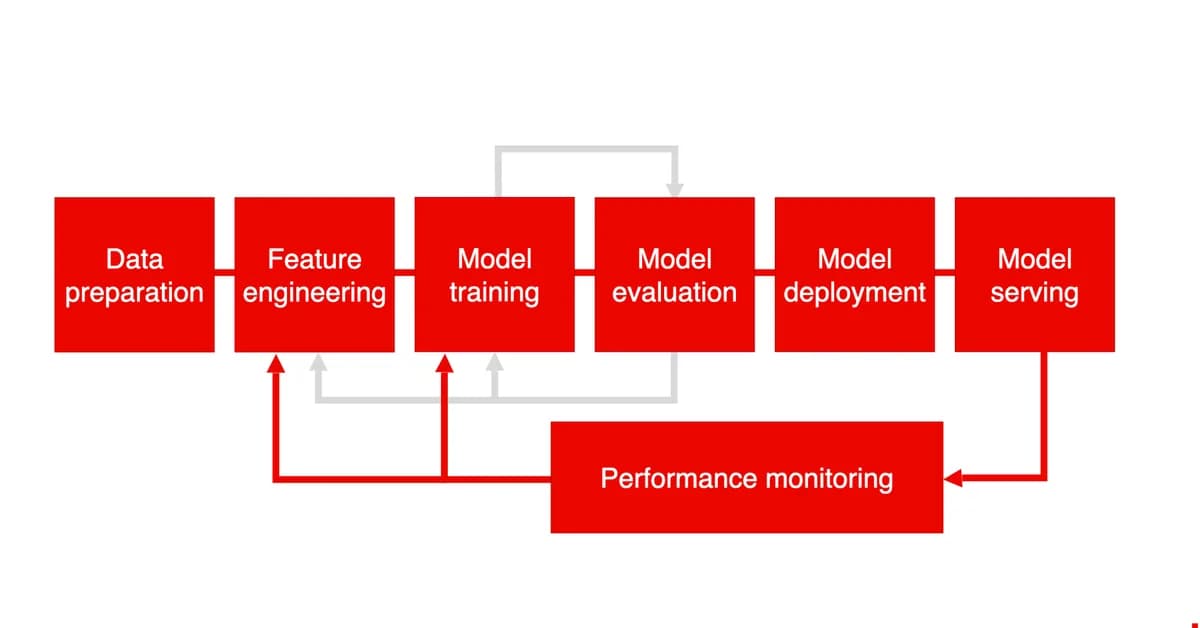
ML.NET now enables .NET developers to train regression, classification, and clustering models directly within C# applications, eliminating the need for separate Python microservices. This integration streamlines development by removing a second runtime and deployment pipeline, significantly reducing prediction latency from 45 ms to 2.8 ms. The shift emphasizes that core ML tasks do not require Python expertise, focusing instead on data preparation and pipeline composition.
Read the full article at DEV Community
Want to create content about this topic? Use Nemati AI tools to generate articles, social posts, and more.
Views50

Ali NematiBlogUI.author_articles