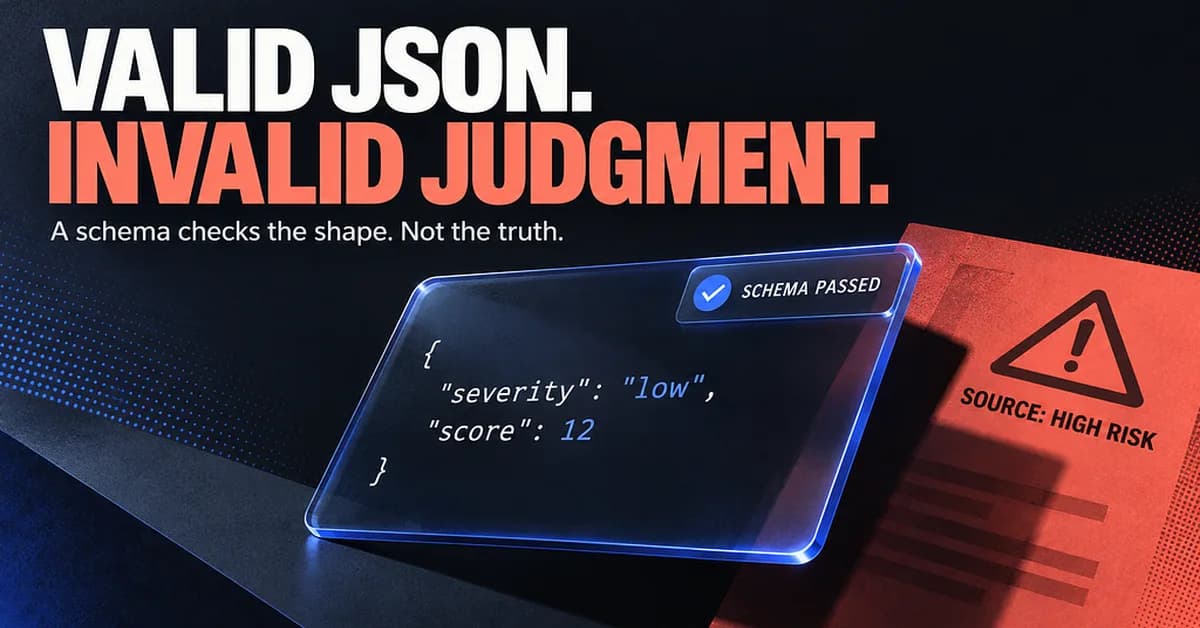
Large language models can produce structured output like JSON, but ensuring this output is semantically correct – meaning it accurately reflects the data – is a significant challenge. Teams have discovered that while a model's output might be structurally perfect and parseable, the resulting data can still be entirely wrong, as evidenced by a risk scoring pipeline that ran incorrectly for weeks. To address this, organizations should move beyond simply validating JSON structure and implement more robust semantic validation checks to ensure the data's accuracy and reliability.
Read the full article at Towards AI - Medium
Want to create content about this topic? Use Nemati AI tools to generate articles, social posts, and more.
Views54

Ali NematiBlogUI.author_articles