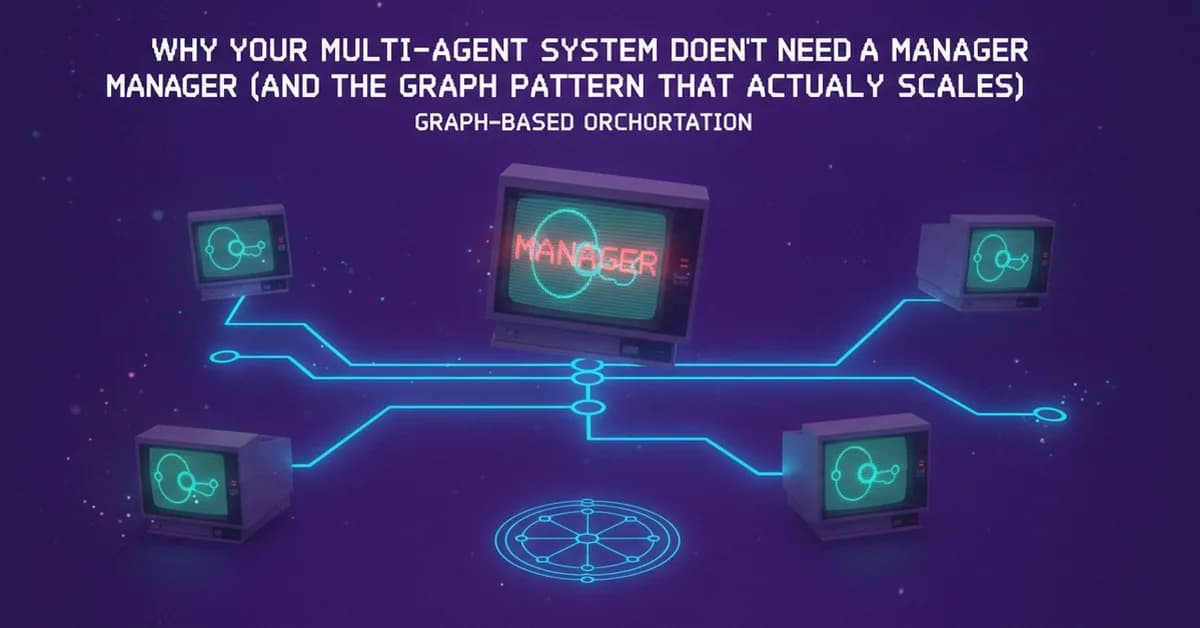
Teams building multi-agent systems are encountering scalability issues due to a common "manager" pattern, where a central agent routes tasks and holds all decisions, creating a single point of failure and context window bottlenecks. A more effective approach involves structuring agents as nodes in a graph, with edges defining control flow and a shared state object managing context, as demonstrated by LangGraph. This graph-based architecture, exemplified by Lyft's customer support system, enables observability, composability, and resilience, ultimately avoiding the limitations of the manager pattern.
Read the full article at DEV Community
Want to create content about this topic? Use Nemati AI tools to generate articles, social posts, and more.