The discussion around OAuth 2.0 Token Exchange (RFC 8693) highlights a critical aspect of securing and managing agent-based applications, especially in the context of AI-driven systems and chatbots. This standard provides a mechanism for an application or service (the "agent") to obtain scoped access tokens from an authorization server without holding long-lived credentials. Let's break down the key points and implications:
Token Exchange Mechanism
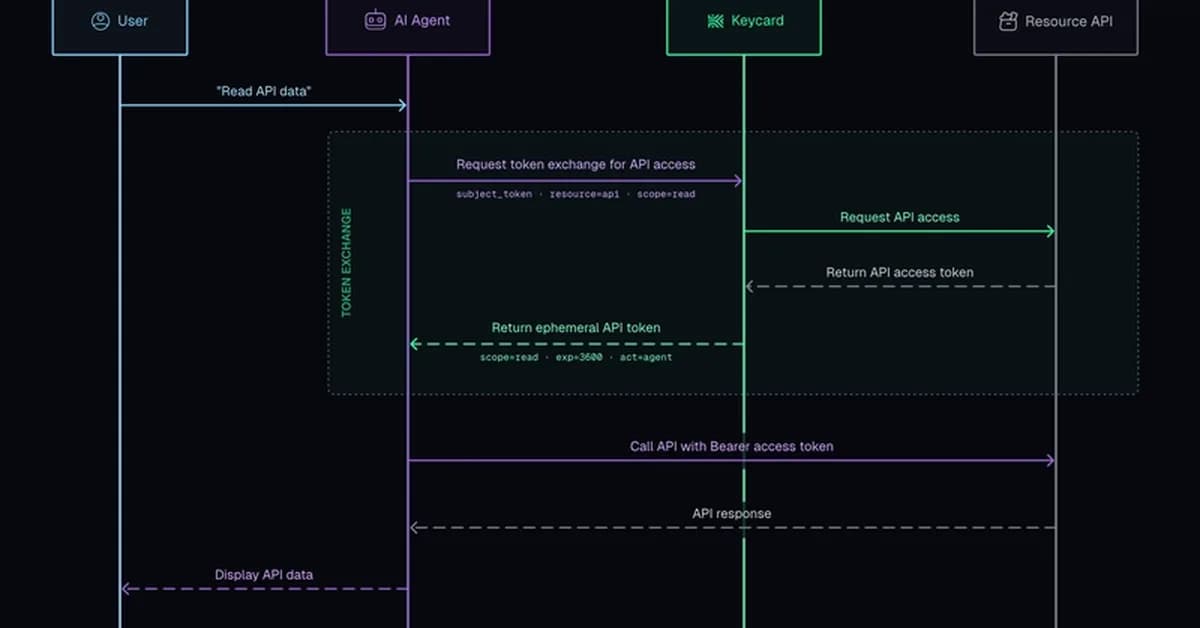
The core idea behind OAuth 2.0 Token Exchange is that an agent can request a token specifically tailored for a given resource, with permissions limited strictly to what is needed at runtime. This contrasts sharply with traditional application security models where broad access tokens are issued upon initial login.
Delegated Agents
- User Authorization: A user authorizes the agent (e.g., AI chatbot) to perform certain actions on their behalf.
- Token Exchange Request: The agent sends a request to an authorization server, including:
subject_token: Token representing the user's identity or initial authentication context.resource: Identifier for the target resource API.scope: Permissions required for the task (e.g., read-only access).
- Response: The authorization server returns a
Read the full article at DEV Community
Want to create content about this topic? Use Nemati AI tools to generate articles, social posts, and more.