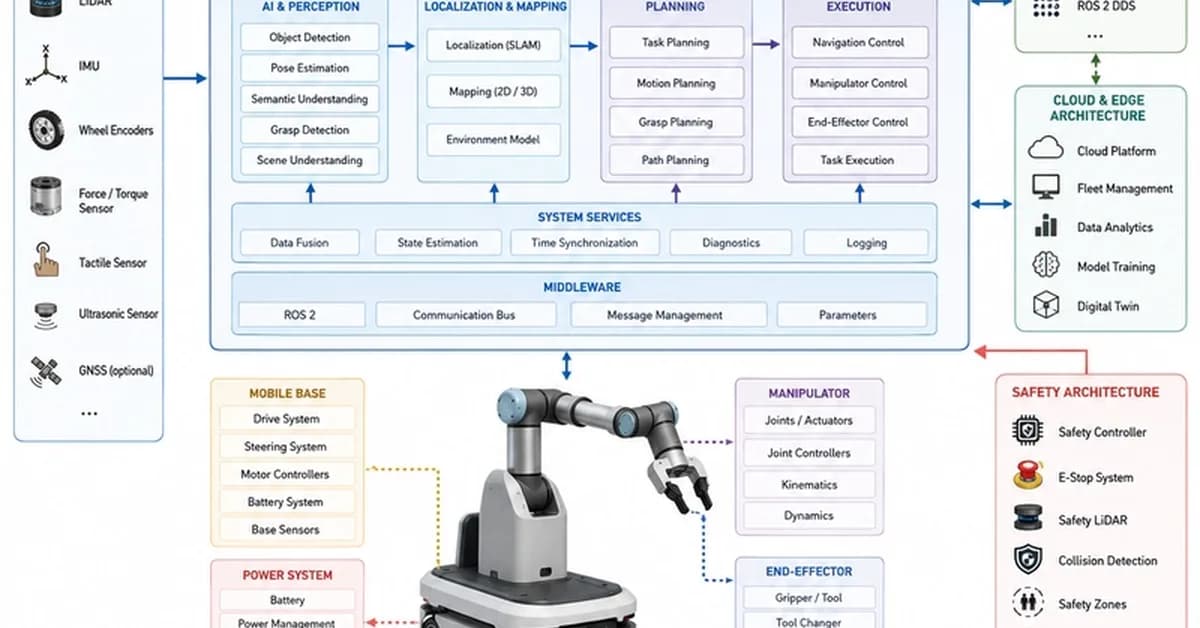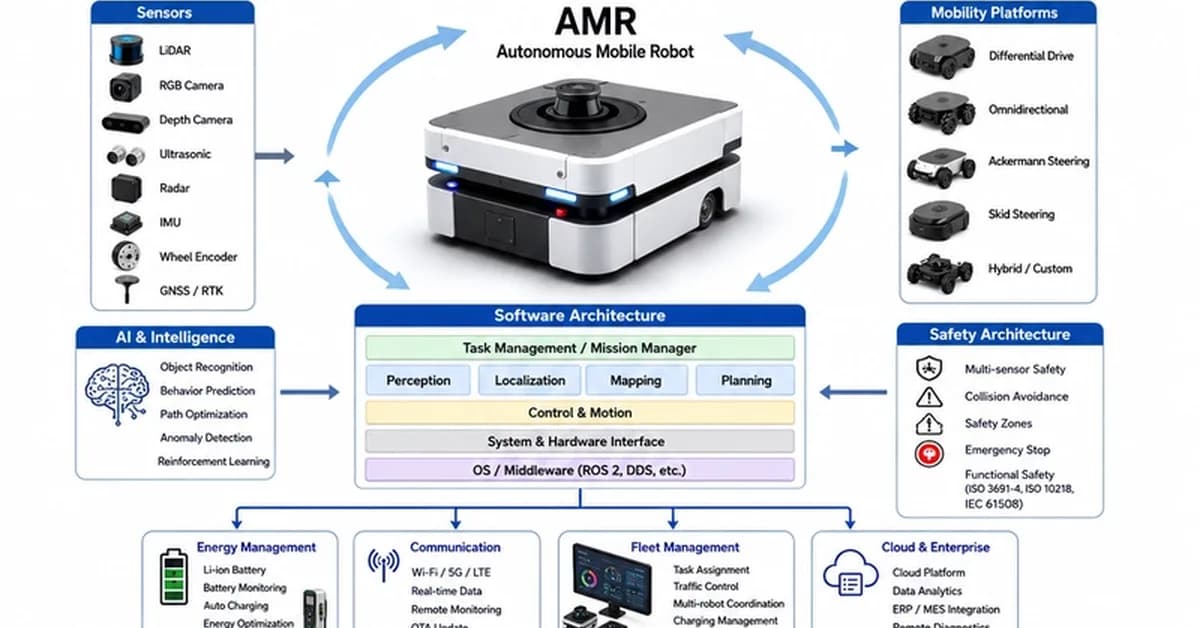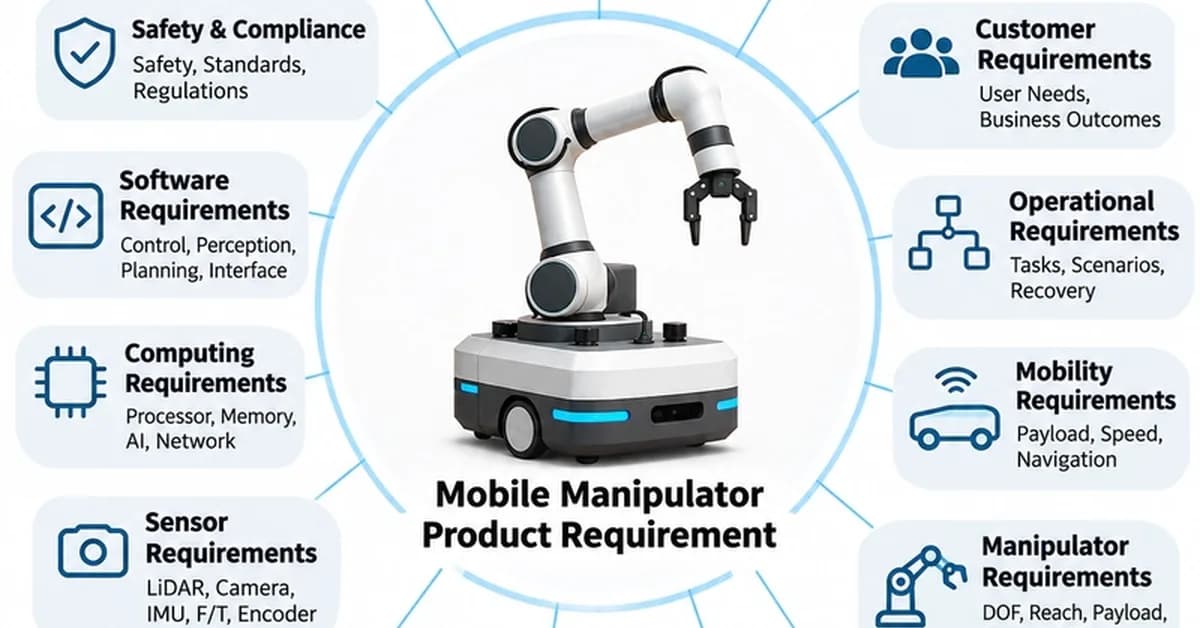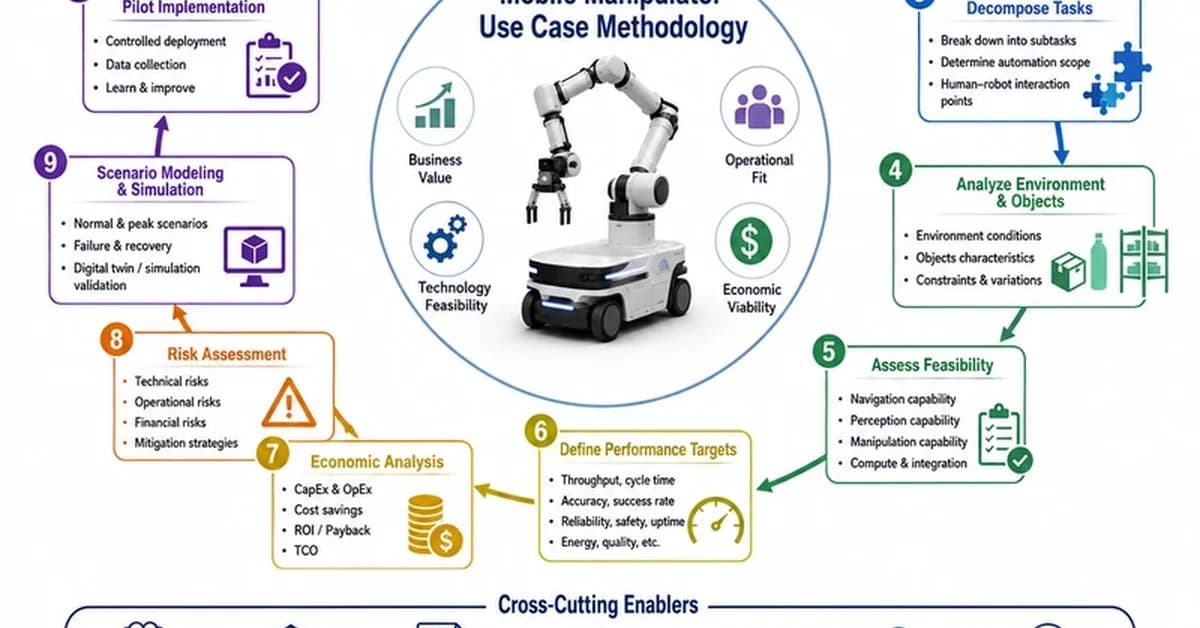
Mobile manipulators, which combine autonomous mobility and robotic manipulation, represent a significant advancement in robotics, offering flexible automation solutions for dynamic environments. A structured methodology for defining and evaluating use cases is now essential for organizations seeking to implement these systems, connecting business objectives with technical capabilities and measurable outcomes. This approach emphasizes understanding operational challenges, analyzing workflows, and assessing feasibility across areas like navigation, perception, and human interaction, which will be crucial for successful deployment and scaling.
Read the full article at DEV Community
Want to create content about this topic? Use Nemati AI tools to generate articles, social posts, and more.

![Mobile Manipulator Foundations and System Architecture - Ch.04: Use Cases [EN]](/_next/image?url=https%3A%2F%2Fmedia.nemati.ai%2Fmedia%2Fblog%2Fimages%2Farticles%2F05e913186e344989.webp&w=3840&q=75)
![Mobile Manipulator Foundations and System Architecture - Ch.03: System Architecture [EN]](/_next/image?url=https%3A%2F%2Fmedia.nemati.ai%2Fmedia%2Fblog%2Fimages%2Farticles%2Fe4b489a1bd324e0f.webp&w=3840&q=75)
![Mobile Manipulator Foundations and System Architecture - Ch.02: AMR plus Robot Arm [EN]](/_next/image?url=https%3A%2F%2Fmedia.nemati.ai%2Fmedia%2Fblog%2Fimages%2Farticles%2F55ecdba274084916.webp&w=3840&q=75)
![Mobile Manipulator Foundations and System Architecture - Ch.17: Checklists and Templates [KR]](/_next/image?url=https%3A%2F%2Fmedia.nemati.ai%2Fmedia%2Fblog%2Fimages%2Farticles%2Fc3310a034d4a48dd.webp&w=3840&q=75)